Royal abbey of Aniane, Benedictine abbey in Aniane, France
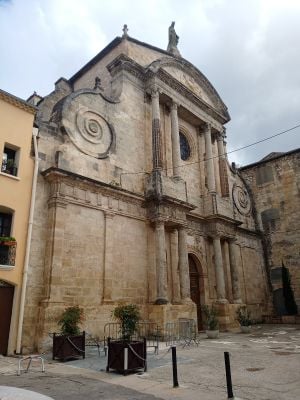
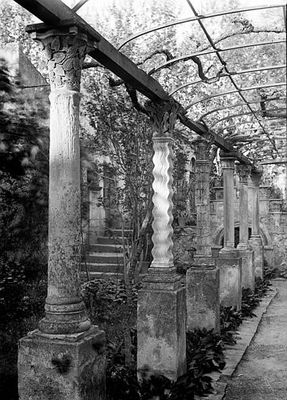
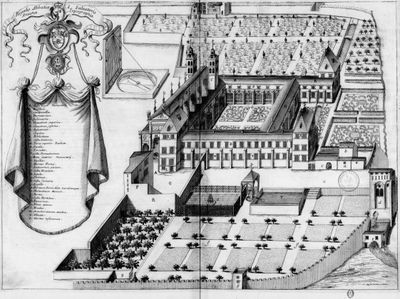
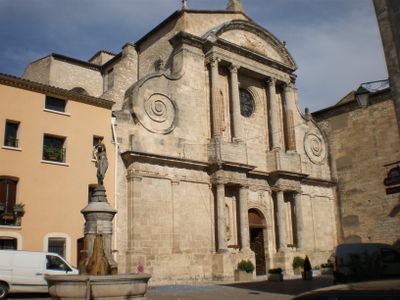
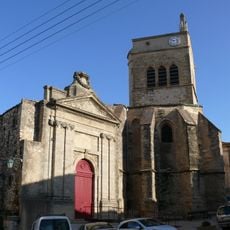
The Royal Abbey of Aniane is a walled monastic complex whose long multi-story range has rows of rectangular windows and a pitched roof, with the parish church of Saint-Sauveur rising at its left end under a slender tower and spire. A cloister with an arcaded courtyard sits behind the main range, and a walled garden holds a circular dial and geometric beds.
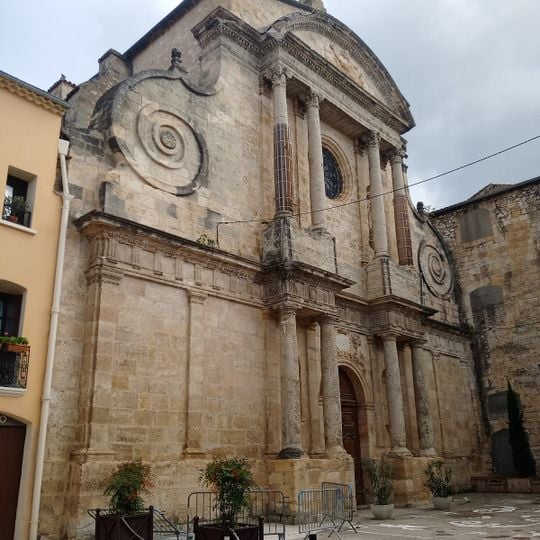
Founded in 782 by Witiza, son of the count of Maguelone, who took the name Benedict, the abbey was endowed by Charlemagne, who granted it immunity in 787. By 800 it housed 300 monks, and in 817 the council of Aachen imposed its customs on all monasteries of the empire. Sacked by Calvinists in 1562, it joined the Maurist reform in 1633; the church was rebuilt from 1679 and consecrated in 1688.
The abbey takes its name from the brook Anian, now called Corbières, which flows into the Hérault just below the site. Its original dedication was to Our Lady and the Holy Saviour, and early altars were also dedicated to Saint Michael and Saints Peter and Paul. In 2011 CNRS excavations uncovered a 17th-century fountain and the paving of a basin probably used to raise fish for the Maurist monks.
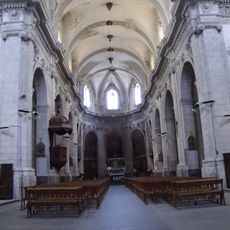
The former abbey buildings, closed as a penitentiary in 1994 and bought by the Vallée de l'Hérault community in 2010, are not open as a museum; the abbey church of Saint-Sauveur still serves the parish. The complex stands in the village of Aniane, on the Corbières brook just above its meeting with the Hérault. The 2011 CNRS excavations uncovered a 17th-century fountain and the paving of a fish basin.
In the 19th century the site was transformed into a prison and later used as a youth detention colony, with this chapter of its history lasting until the 1990s. Evidence of this unusual use remains visible in parts of the complex.
The community of curious travelers
AroundUs brings together thousands of curated places, local tips, and hidden gems, enriched daily by 95,360 contributors worldwide.