Hôtel-Dieu de Paris, Hospital facility next to Notre Dame Cathedral, Paris, France
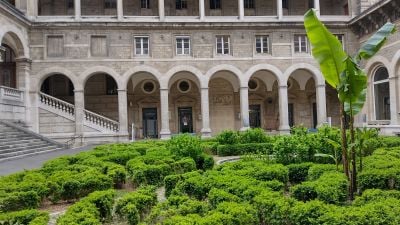
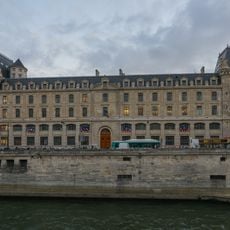
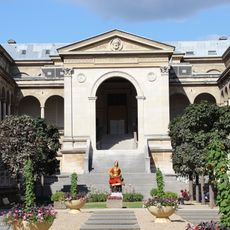
The Hôtel-Dieu de Paris is a hospital complex situated beside Notre-Dame Cathedral on Île de la Cité. It extends along the northern side of the Parvis Notre-Dame square with a central courtyard and classical architectural elements from the 19th century.
Tradition attributes its founding to Saint Landry around 650, but the first documented records of a hospital here date to 829. Maurice de Sully rebuilt it from 1165, and the halls were completed by 1255 on the south side of the Île de la Cité. Ravaged by fire repeatedly, it was rebuilt between 1867 and 1878 by architects Émile Jacques Gilbert and Arthur-Stanislas Diet at its present site north of the parvis, during Haussmann's renovation of Paris.
The name means "God's shelter", and the house long welcomed pilgrims heading for Jerusalem or Santiago alongside the sick. An 18th-century essayist, Louis Rondonneau de la Motte, wrote that citizen and foreigner, Christian and Turk, Jew and idolater were all equally welcome. A third of the surface is to host shops and health-related business incubators after renovation, and a museum on Notre-Dame and its restoration is planned.
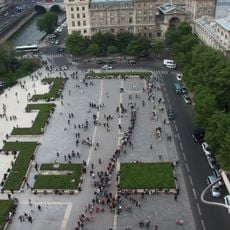
The complex faces the Parvis Notre-Dame on the northern side of Île de la Cité and is served by Cité metro station on line 4. The courtyard is entered from the parvis side; the gravel floor is laid with rows of flat rectangular panels and patches of grass. The site is an active public hospital, so access is limited to areas open to the public.
The Hôtel-Dieu was the only hospital in Paris until the early 17th century. From the reign of Louis IX onward it regularly held more patients than designed: its halls had 80 to 100 beds each, and beds 1.3 metres wide were meant for two or three patients lying heel-to-head.
The community of curious travelers
AroundUs brings together thousands of curated places, local tips, and hidden gems, enriched daily by 93,564 contributors worldwide.