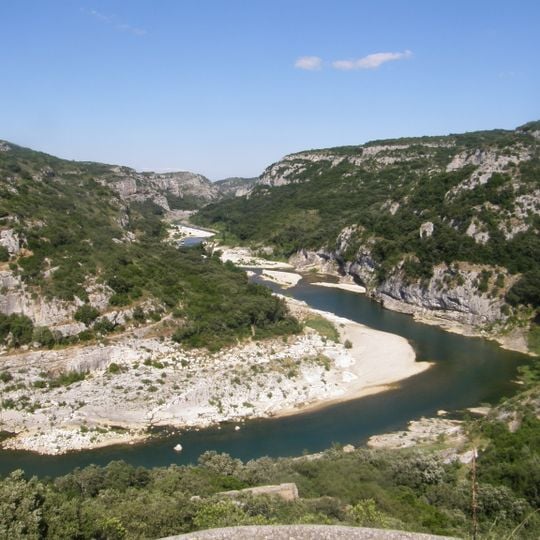
Gorges du Gardon, Limestone canyon in Occitanie, France.
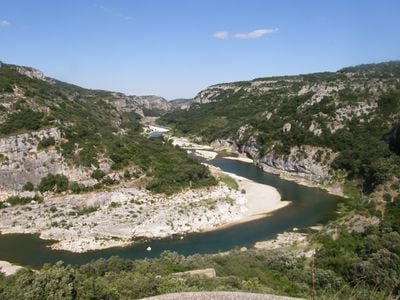
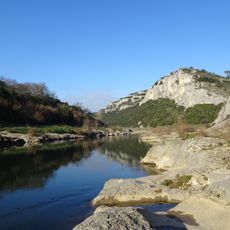
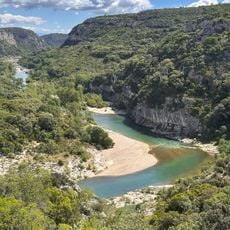
The Gorges du Gardon is a deep canyon carved by the river through limestone plateaus, with vertical rock faces rising on both sides of the water. The landscape varies between narrow passages where the cliffs press close and wider sections where the river spreads and flows over rocky obstacles.
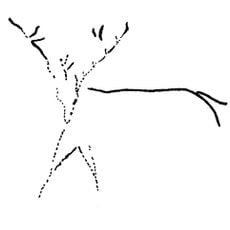
People have lived in caves within the gorges since prehistoric times, as shown by archaeological finds scattered throughout the site. The area later became home to villages that developed along the river, adapting to the landscape over many centuries.
The caves of the gorges served as drinking-water reservoirs, cult sites and gathering places: the Grotte de la Citerne stored water, the Grotte de Saint-Vérédème was a place of worship, and the Grotte du Sambuc and Grotte de la Salpétrière hosted assemblies and festivals. Near Collias, the 8th-century hermitage of Saint-Vérédème, the oldest Christian building in Bas-Languedoc, has an apse with wall paintings from that period.
The canyon runs west to east for 22 km, from near Russan to Remoulins, and the Pont du Gard crosses it. Infrastructure is limited, so bring your own water and plan shuttles for one-way paddling or walking. The river stays cold even in heatwaves because it flows underground upstream; autumn rains can raise it from 15 m³/s to 5,000 m³/s.
The Pont du Gard aqueduct crosses the gorge, and its stone came from small quarries cut into these same cliffs since Roman times. Look for the horizontal rock ledges stepping down to the water on the left bank, the traces of those extraction sites.
The community of curious travelers
AroundUs brings together thousands of curated places, local tips, and hidden gems, enriched daily by 94,440 contributors worldwide.