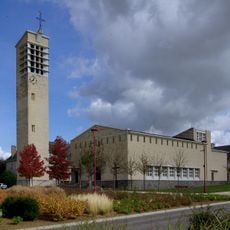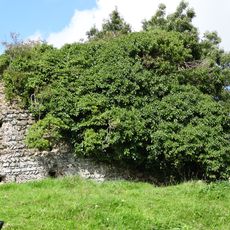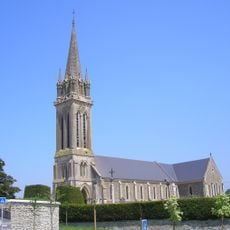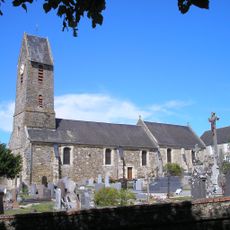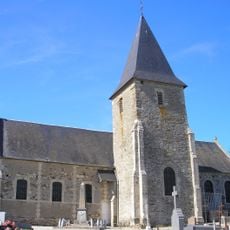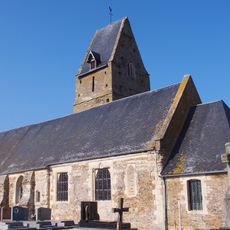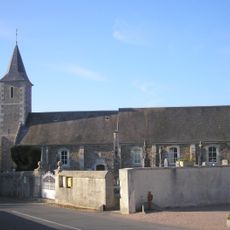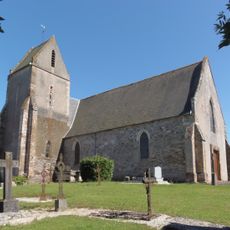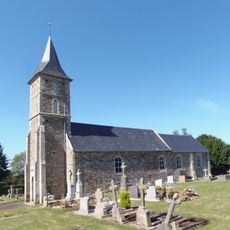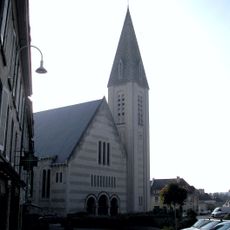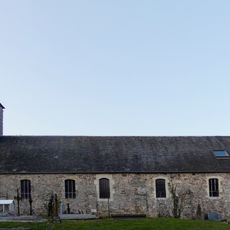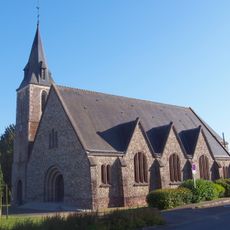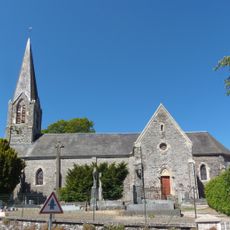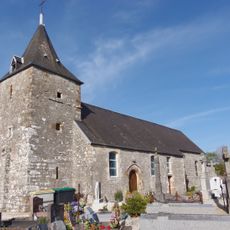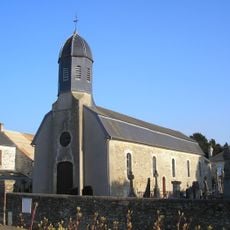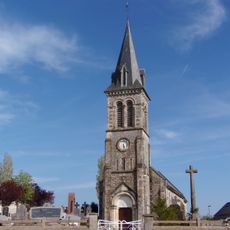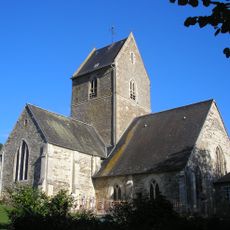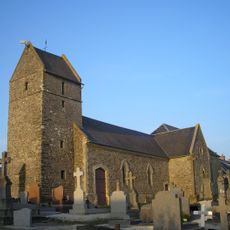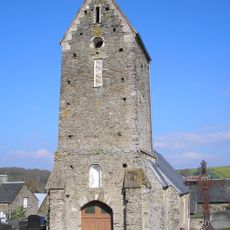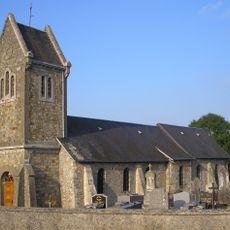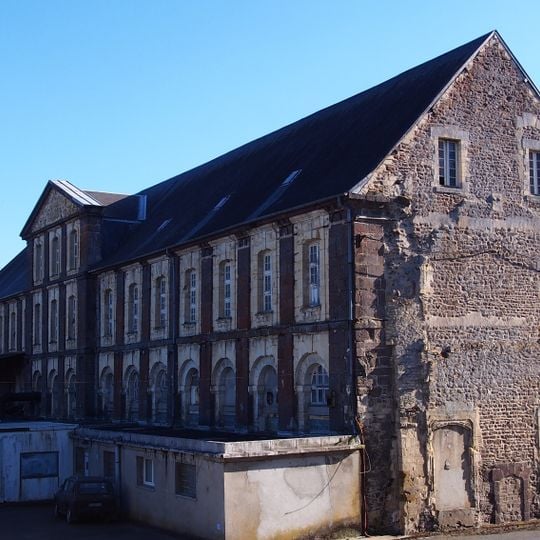
Notre-Dame d'Aunay Abbey, Cistercian abbey in Les Monts d'Aunay, France.
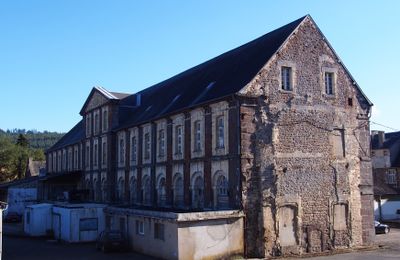
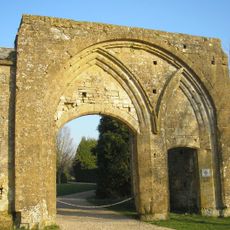
Notre-Dame d'Aunay Abbey stands about a kilometre west of Aunay-sur-Odon, near the Odon river. Of the abbey church, built in limestone, only the eastern part of a transept aisle survives, with capitals carved with water leaves and corner volutes, typical of the 1150s–1160s. The present buildings are largely modern, built of very hard local sandstone; the guest wing, heightened in the early 20th century, keeps a central staircase, and part of the refectory wing and the library with its Louis XV fireplace remain.
Jordan and Lucy of Say founded this monastery in 1131, and it joined the Cistercian order through Savigny Abbey in 1147. The community shaped religious life in this region for several centuries afterward.
The abbey's name, Notre-Dame, refers to the Virgin Mary, to whom the church was dedicated on 15 November 1136. The lords of Aunay, its patrons, were buried in the church from the 12th century. The site later housed a spinning mill owned by François Richard-Lenoir and Joseph Lenoir-Dufresne, then a dairy that made Le Moine cheese, a brand registered in 1927 and sold for 53 years.
The site allows visitors to see remains from both the medieval period and the later 18th-century reconstruction, making it interesting to compare different building styles in one location. Taking time to explore both the older and newer sections helps you understand how the abbey evolved over time.
The abbey became the headquarters of the Société Laitière des Fermiers Normands, which registered the Le Moine brand at the Caen commercial court on 6 May 1927; it was sold for 53 years, until 1980. The name referred to Aunay's monastic past, and a cheese dairy on the site closed in 1976.
The community of curious travelers
AroundUs brings together thousands of curated places, local tips, and hidden gems, enriched daily by 94,467 contributors worldwide.