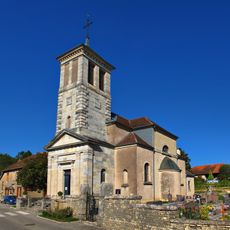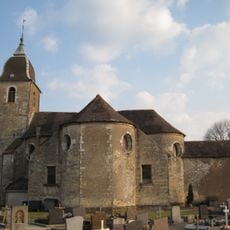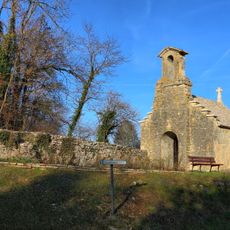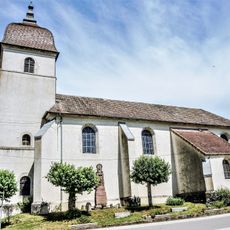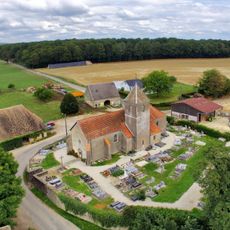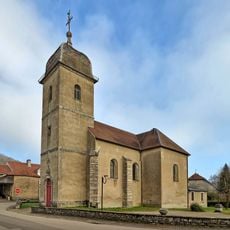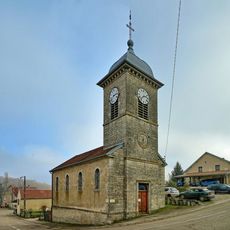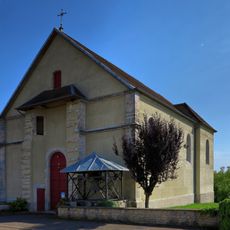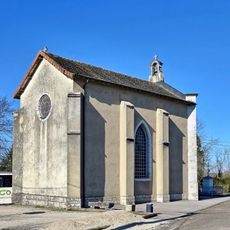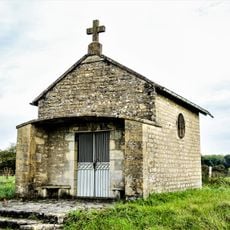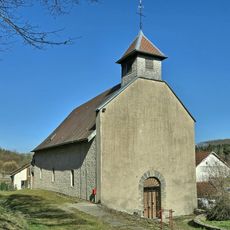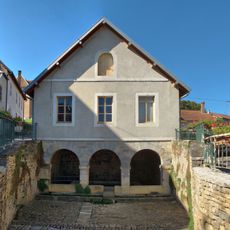
Bellevaux Abbey, Cistercian abbey in Cirey, France.
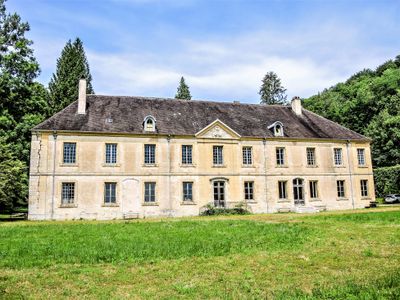
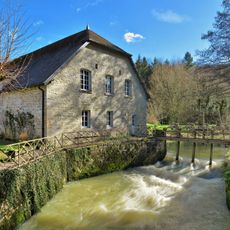
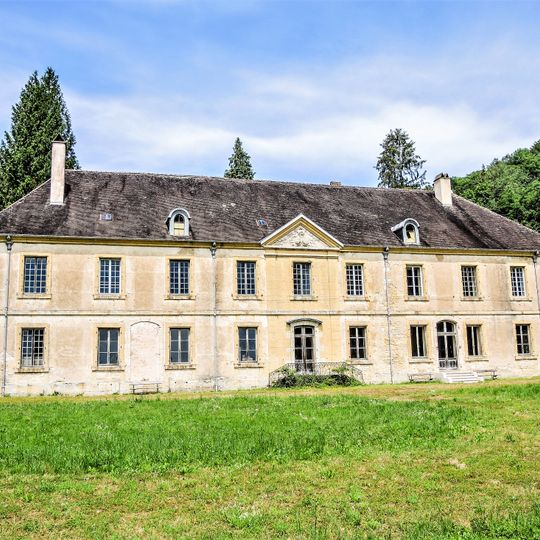
Bellevaux Abbey is a former Cistercian monastery in Cirey, Haute-Saône. The surviving two-storey stone building has a pale, weathered facade with a central projecting section topped by a triangular pediment, a round-arched doorway with steps, and shuttered windows. The medieval abbey church, consecrated in 1143, is known only from its foundation walls and floor remains, which lie just below the present ground surface.
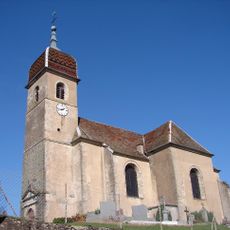
Pons I de La Roche and Étienne de Traves founded Bellevaux in 1119 as the first daughter house of Morimond and the first Cistercian abbey in Franche-Comté. The church, dedicated to Notre-Dame, was consecrated in 1143. Peter II of Tarentaise died at Bellevaux in 1174 and was buried in the abbey church; his relics were transferred to the church of Cirey after the French Revolution.
Peter II of Tarentaise, archbishop and former monk, died at Bellevaux in 1174 and was buried in the abbey church; his tomb became a pilgrimage centre well before his canonisation in 1191. Nobles of the region and three archbishops of Besançon chose burial in the abbatiale. In 1497 the relics were displayed to raise alms for church repairs, and after the Revolution they were moved to the church of Cirey.
The complex sits in the Haute-Saône department and has been listed as a historical monument since 1946. Its location in a remote wooded valley requires independent transportation, and visitors should verify limited opening hours in advance.
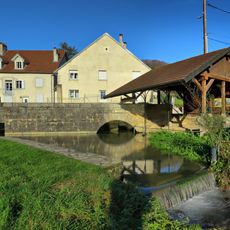
The abbey's water system was not fed by a spring: an existing stream was canalised to carry off waste water, and a separate network of small open channels was branched off for irrigation. The buildings were laid out along the valley floor, so the church choir faced south-west rather than east.
The community of curious travelers
AroundUs brings together thousands of curated places, local tips, and hidden gems, enriched daily by 94,660 contributors worldwide.