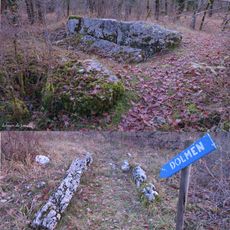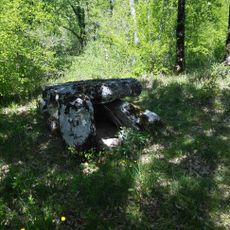
Grotte de Foissac, Prehistoric cave in Foissac, France.
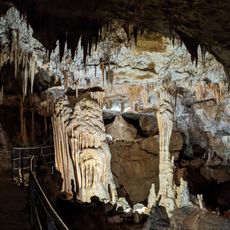
Foissac Cave opens in Middle and Upper Jurassic limestones and dolomites and has a developed length of 11,000 m, with three entrances: the locked FFS entrance leading to the paintings, the Trou qui Fume for cavers, and an artificial tourist entrance. Its upstream section holds Late Neolithic remains dated to about 2700 BC, while the François Rouzaud room contains Upper Palaeolithic paintings and engravings.
The cave network was discovered in 1959, and its upstream section was uncovered in 1965, developed and opened to the public in 1973. Excavations there ran from 1978 to 1988, and the site was classified as a monument historique on 6 March 1978. From 2020 to 2022 an inventory and dating programme covered the network's prehistoric occupation phases.
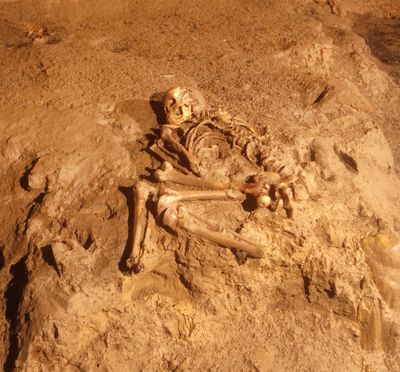
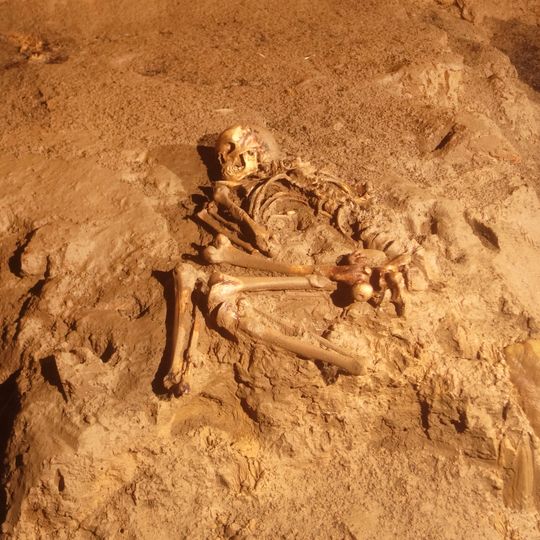
The site shows traces of how people lived and buried their dead in prehistoric times, visible in what remains within the chambers. Visitors can observe the layout of these burial areas as they walk through.
The cave keeps a constant 13 °C year-round, so bring a jacket even in summer. Access to the decorated François Rouzaud room is via the locked "FFS" entrance, while visitors use the artificial tourist entrance; the Trou qui Fume is reserved for speleologists. Non-flash photography is permitted.
In 2014, a roughly ten-centimetre statuette carved from a bison or aurochs phalanx was found in the François Rouzaud room. It depicts a figure, probably female, holding a child or an animal. The room is named after archaeologist François Rouzaud, who studied the cave and died in 1999.
The community of curious travelers
AroundUs brings together thousands of curated places, local tips, and hidden gems, enriched daily by 94,657 contributors worldwide.