Forest of Compiègne, State forest in Picardy, France
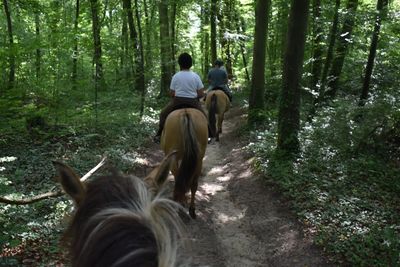
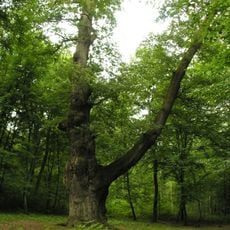
The Forest of Compiègne is a large deciduous woodland dominated by oak and beech trees covering thousands of hectares. A network of marked paths winds through the forest, allowing visitors to explore different areas at their own pace.
The forest was a favoured hunting ground for French kings from the Merovingians onward; Clothaire I died at his palace of Cusia there in 561. Francis I opened eight roads converging on the Puits du Roi in the 16th century, and Louis XIV added 54 routes. The Armistice of 11 November 1918 and that of 22 June 1940 were signed in the forest.
The forest's name recalls Cuise, the old royal residence of Clothaire I, who died there of fever in 561. White signposts have marked its 311 named crossroads since 1669, and the oldest carry a small red mark pointing toward the château, ordered after Empress Eugénie got lost in the woods.
The forest is easily accessible from multiple entry points with parking available at several locations. Spring and autumn offer the best conditions for walking, with mild weather and well-maintained paths throughout the woodland.
The 1918 and 1940 armistices were signed in a railway carriage at the Clairière de l'Armistice, a clearing in the forest. The original carriage was taken to Germany in 1945 and later destroyed; the vehicle displayed there today is a replica of the 1918 carriage, set beside the Alsace-Lorraine monument and the stone table where the 1918 text was signed.
The community of curious travelers
AroundUs brings together thousands of curated places, local tips, and hidden gems, enriched daily by 94,094 contributors worldwide.