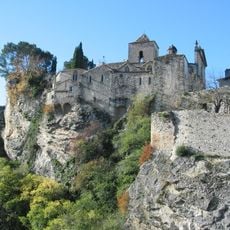
Chapelle Saint-Quenin de Vaison-la-Romaine, Romanesque chapel in Vaison-la-Romaine, France
Chapelle Saint-Quenin de Vaison-la-Romaine is a 12th-century chapel whose triangular chevet is framed by fluted columns and pilasters with acanthus capitals, carrying an entablature with a frieze of geometric panels and figures such as a man with a falcon. The nave, rebuilt between 1630 and 1636, is narrower, undecorated and buttressed, with a bell gable and a bas-relief of a vine vase above the door.
This chapel was built in the second half of the 12th century on ground that once held a Roman burial place. The location reflects how medieval communities often chose to build in areas where earlier civilizations had left their mark.
The chapel is named after Saint Quenin, a 6th-century monk of Lérins and bishop of Vaison, canonised by Pope Innocent III in 1205. The bas-relief above the west door, a vase with vine shoots and grape clusters beneath a jewelled Latin cross, became the official coat of arms of Vaison in 1630.
You should contact the local heritage office ahead of time since this chapel does not have regular public hours. Arranging your visit in advance helps ensure the building is open when you arrive.
The chapel has an unusual triangular choir that differs noticeably from typical church designs of that period. This uncommon architectural choice makes it a striking example of how local builders experimented with different forms.
The community of curious travelers
AroundUs brings together thousands of curated places, local tips, and hidden gems, enriched daily by 94,501 contributors worldwide.