Abbaye Sainte-Odile de Baume-les-Dames, Benedictine abbey in Baume-les-Dames, France.
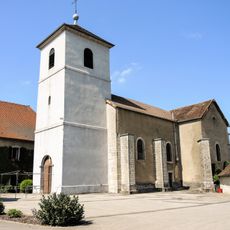
Abbaye Sainte-Odile de Baume-les-Dames is a Benedictine abbey in Baume-les-Dames, in the Doubs department, not Burgundy. Of the monastic complex only the abbey church remains, built between 1738 and 1760 by the Besançon architect Nicolas Nicole. Its choir, the only part completed, rises 24 m; the interior had white marble columns and pink marble from Sampans.
Named Palma or Palmense Monasterium at its origin, the Benedictine abbey was reportedly founded in the 4th century by Saint Germain, archbishop of Besançon, or by Garnier, mayor of the palace of the county of Burgundy, who died at the end of the 6th century. It is mentioned in the Life of Saint Ermenfroy written around 720-730 and in the 831 testament of Anségise. The church was rebuilt between 1738 and 1760 by the Besançon architect Nicolas Nicole for abbess Angélique-Henriette d'Amas; work stopped in 1760 when her funds ran out, leaving only the 24-metre choir of the planned 44-metre church.
The abbey was led by abbesses heading a chapter of fifteen canonesses, who had to prove eight quarters of nobility, four generations on both the paternal and maternal sides, and take vows of chastity, poverty and obedience. From 1155 they were exempted from work and from guarding the town ramparts. The name honours Saint Odile, hidden here as a child; baptised at thirteen, she is said to have regained her sight.
Of the original monastic complex, only the abbey church remains, so a visit centres on that single building. Nicolas Nicole planned a 44-metre church with a bell tower porch, but work stopped in 1760 and only the choir, 24 metres high, was finished; the rest was closed off by a wall. Look for the choir and the lectern by Nicole, later moved into the church.
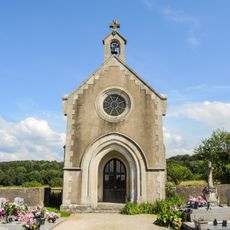
The tomb of Count Garnier, the abbey's possible founder, was opened in 1768 at the abbess's request and found to hold very old bones. It was destroyed during the Revolution; some fragments were reused at the Château d'Esnans and the bones moved to the cemetery of Cour-les-Dames.
The community of curious travelers
AroundUs brings together thousands of curated places, local tips, and hidden gems, enriched daily by 94,524 contributors worldwide.