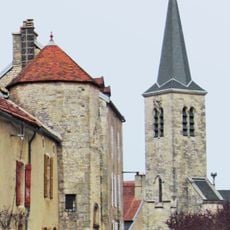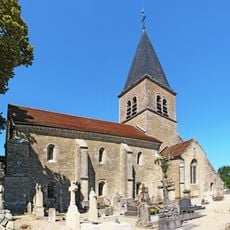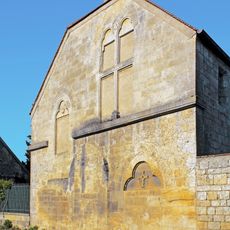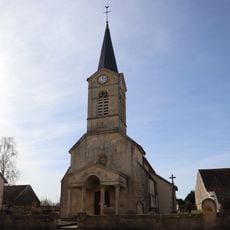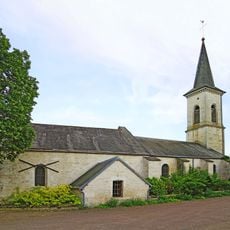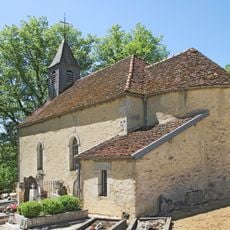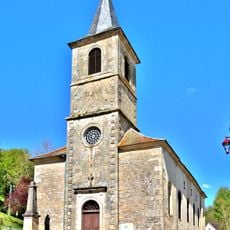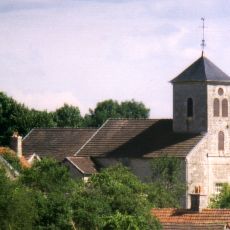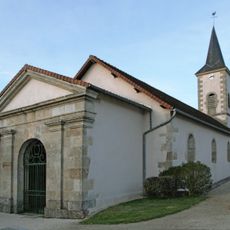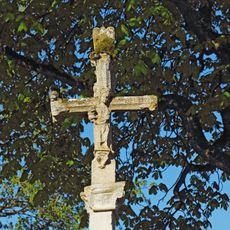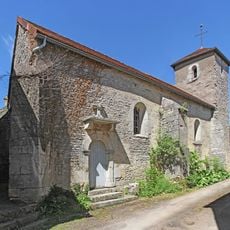
Abbaye Notre-Dame d'Oigny, Augustinian abbey in Oigny, Côte-d'Or, France.
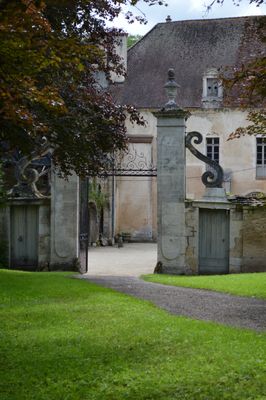
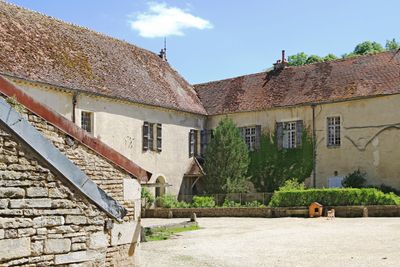
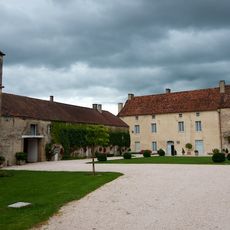
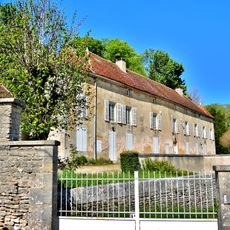
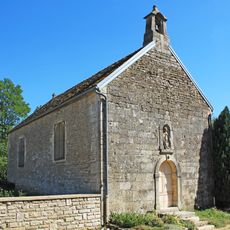
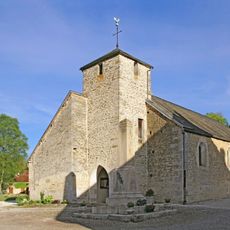
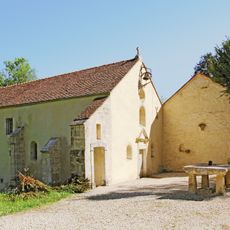
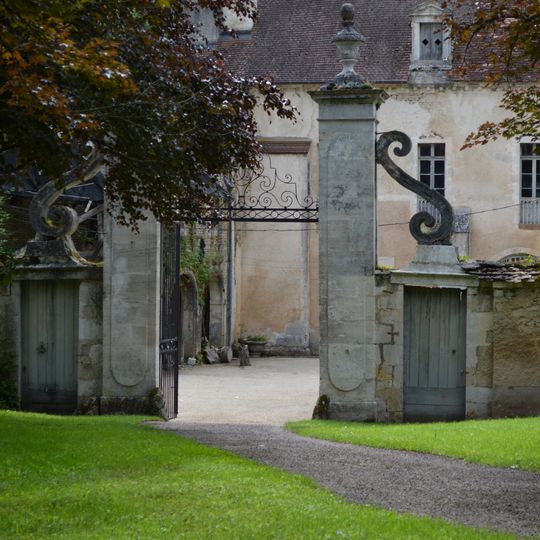
Abbaye Notre-Dame d'Oigny is a former monastery of Augustinian canons in a wooded valley of the Côte-d'Or, about ten kilometres from the source of the Seine. Its buildings form an L around a gravel courtyard: pale beige stone and stucco walls, steep roofs of small reddish-brown tiles, tall rectangular windows with dark wooden shutters, and a round-arched doorway in the left wing. A masonry gateway with two finial-topped pillars and wrought-iron scrolls opens onto the courtyard.
The monastery began in 1106 when monks established their community here and received support from local nobles through land grants. Before gaining its formal status, the location served as a shelter for important religious figures who would later found another major monastic order.
The abbey's name appears in its cartulary as the Latin "Ungiacensis, domus inclyta", meaning "Oigny, illustrious house". The community followed the Rule of Saint Augustine, a rare choice in the Côte-d'Or, where only Notre-Dame de Châtillon shared it. Its customary, compiled under Abbot Constantin, was borrowed for the founding texts of the Premonstratensian order.
The abbey is a private property, listed as a monument historique since 1990, and not open for regular visits. The buildings stand in a wooded valley about ten kilometres from the source of the Seine, in the hamlet of Oigny. Access is by road; the courtyard and gate are visible from the lane.
The grounds became a temporary home for leaders who would go on to establish one of medieval Europe's most influential monastic movements. This connection shows how the location served as a launching point for religious innovation that would spread beyond the region.
The community of curious travelers
AroundUs brings together thousands of curated places, local tips, and hidden gems, enriched daily by 94,657 contributors worldwide.