Joyenval Abbey, 13th-century Premonstratensian monastery in Chambourcy, France
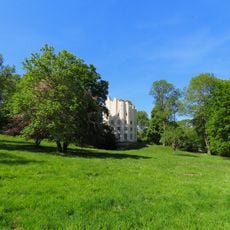
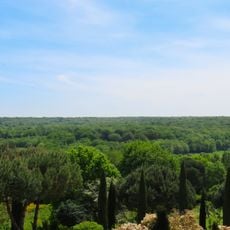
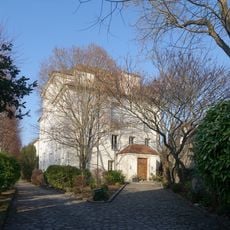
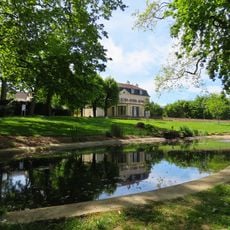
Joyenval Abbey is a ruined Premonstratensian monastery in the Forêt de Marly at Chambourcy. Of the abbey church, only a tall fragment of pale masonry with a rounded arch opening and a small ledge above survives, standing beside low wall remnants along a gravel path at the foot of a wooded slope on the Joyenval golf course.
The monastery was founded in 1224 by Barthélemy de Roye, a high official under King Philip II of France. It was established near the fortress of Montjoye in the Marly Forest and developed as a major religious community.
The name Joyenval, "Joye-en-Val", comes from the valley site below the Montjoye keep where a hermit lived by a spring. The abbey church was dedicated to Saint Laurence and, after the transfer of relics in 1261, also to Saint Bartholomew. The canons held a Paris town house in the street they gave their name to, now Rue des Orfèvres.
The ruins are situated within a golf course and are viewable from the surrounding grounds without needing to access the golf club directly. The site is relatively secluded, so plan your visit carefully and allow time to locate the exact position of the remains.
The canons' Paris town house gave its name to a street on the right bank, recorded by Guillot de Paris in Le Dit des rues de Paris as rue à Moingnes-de-Jenvau, a corruption of rue aux Moines-de-Joienval. In 1698 the house was replaced by a salt warehouse; the street is now the Rue des Orfèvres in the 1st arrondissement.
The community of curious travelers
AroundUs brings together thousands of curated places, local tips, and hidden gems, enriched daily by 94,473 contributors worldwide.