Château de Jonzac, Medieval castle in Jonzac, France.
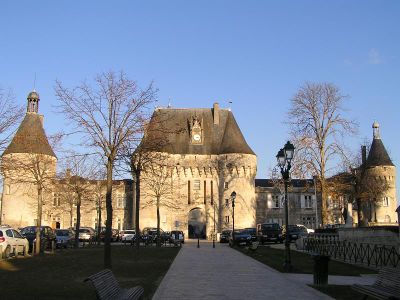
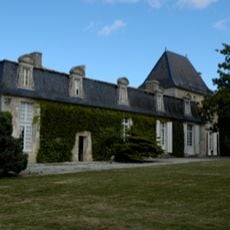
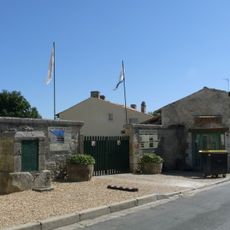
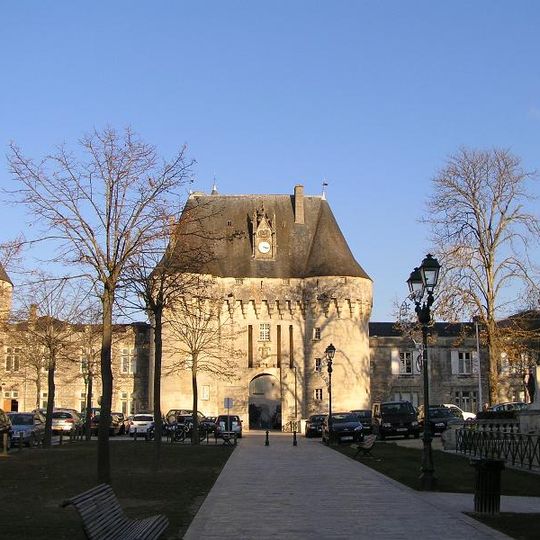
Château de Jonzac is a castle whose entrance gatehouse, dated 1549, is flanked by two towers with tall slate pepper-pot roofs; the north-west tower is from the 16th century, the narrower south-west tower from the 17th. The gatehouse has a two-pitched roof linking its two pepper-pots, and the facade above the Seugne keeps its crenellations, corbelled turrets and balustraded balconies.
The castle first appears in written records dating to 1073, but suffered heavy damage during the Hundred Years War and underwent major reconstruction by 1449. The rebuilt structure from that era largely defines its appearance today.
The north wing houses town hall offices today, while the south wing has served as administrative offices for the sub-prefecture since 1846. This dual function makes it a working center for daily civic life rather than merely a historical artifact.
The castle is a working public building: the north wing holds the town hall and the south wing the sub-prefecture, so access is limited to the courtyards and the cloister, which houses the cultural centre, exhibition rooms and archaeological museum. Restoration began in 2001, when the western moat was dug out again and the north tower repaired. The moat, cut into the rock, had been filled in during the 19th century.
In 1659, King Louis XIV visited the castle along with his mother and Cardinal Mazarin, a rare mark of royal attention at the highest level. This visit remains one of the most notable moments in the site's history.
The community of curious travelers
AroundUs brings together thousands of curated places, local tips, and hidden gems, enriched daily by 95,742 contributors worldwide.