Chapel of Kermaria an Iskuit, Medieval chapel in Plouha, France
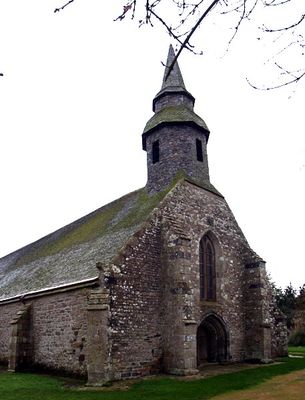
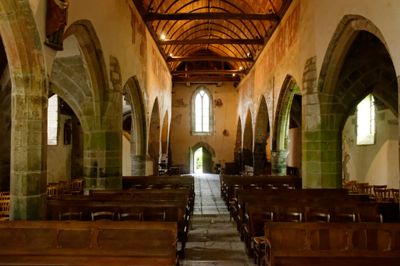
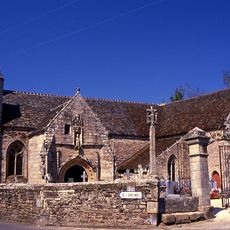
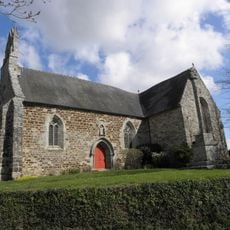
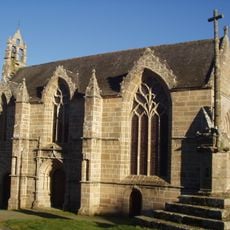
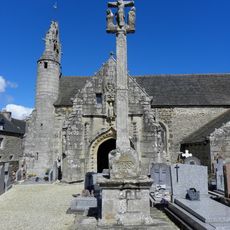
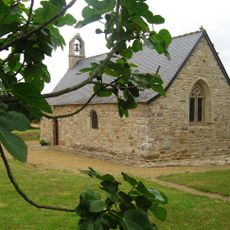
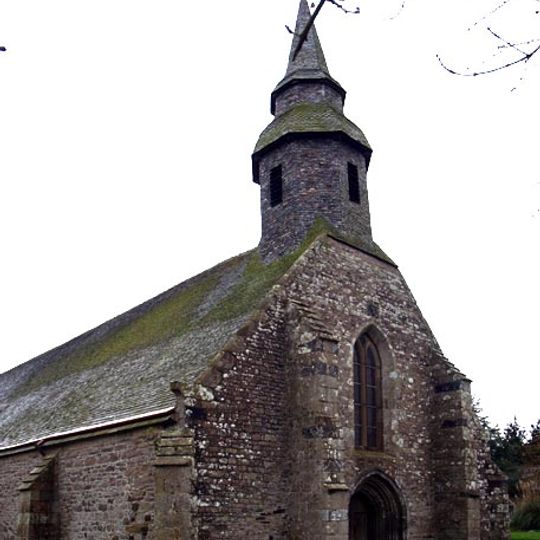
The Chapel of Kermaria an Iskuit is a medieval stone building in Brittany with a central nave divided into seven bays, flanked by two side aisles and a three-sided choir. The structure is fairly compact and shows solid construction throughout.
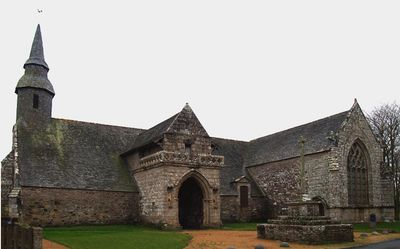
Henri II d'Avaugour, who returned from the Holy Land crusade in 1240, is credited with founding the chapel. The four western bays of the nave date from the 13th century; the last three bays, the private chapel and the south porch were added in the 15th century. The west tower's spire bears the date 1702, and the choir was built between 1720 and 1721.
The Danse Macabre fresco, painted between 1488 and 1501, runs high along both sides of the nave above the arcades separating the aisles. It shows 47 figures about 1.3 m tall, led by an author figure who wrote eight-line moral verses beneath each character. Whitewashed in the 18th century, it was uncovered in 1856 by Charles de Taillart. Kermaria and Kernascléden are the only two Breton sanctuaries with such a fresco.
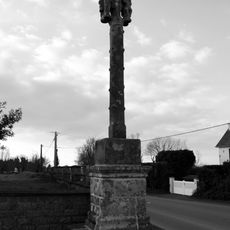
The chapel stands in the hamlet of Kermaria, within the commune of Plouha in the Côtes-d'Armor. The building is entered through the south porch, whose upper chamber once served as the seigneurial court of Lezandrev-Kermaria. Inside, the oldest bays of the nave have plain cylindrical pillars, while the later bays rest on thinner octagonal columns.
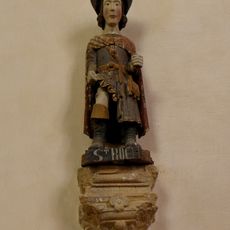
The south entrance preserves carved wooden figures from the 15th century and houses a Renaissance gallery with a chamber room on the upper level. These features reveal the variety of artistic work at the site.
The community of curious travelers
AroundUs brings together thousands of curated places, local tips, and hidden gems, enriched daily by 94,553 contributors worldwide.