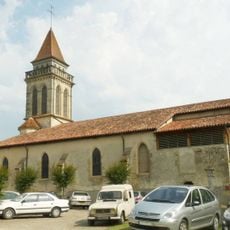
Chapelle de Lugaut, Romanesque chapel in Retjons, France
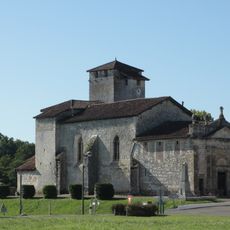
Chapelle de Lugaut is a Romanesque chapel in Retjons with a nave made of rendered rubble stone and a modern timber roof. The choir extends as a square structure built with dressed stone.
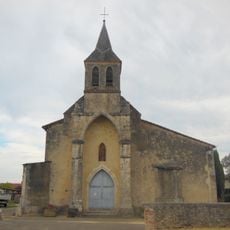
Built between the 11th and 12th centuries on the right bank of the Bourriot stream, the chapel stood in an ancient wood; its name comes from the Gascon 'luc', a sacred grove. In 1569 Huguenot troops under Montgomery pillaged and burned it, sparing the dressed-stone choir but forcing the nave to be rebuilt lower and narrower with reused rubble. The wall bell tower was added in 1783 and altered in 1862. The murals, hidden under 18th- and 19th-century whitewash, were rediscovered around 1960 by Retjons schoolteacher Marcel Labidalle.
The name Lugaut comes from the Gascon "luc", a sacred wood. The wall paintings, in the Romanesque manner of Cluny with Italo-Byzantine touches, set Gospel scenes beside everyday ones: dancing and war as vice, peace and work as virtue, and hunting. A Latin inscription records Amanieu V d'Albret granting the church and its tithes to the Hospitallers of Jerusalem.
The exterior is open year-round and easy to view at any time. Interior access is limited to guided visits during summer months, so plan ahead if you want to see the indoor paintings.
Next to the chapel stands a sandstone rock called the Devil's Hand, marked with five carved lines tied to local religious beliefs. This unusual stone draws visitors interested in the folk traditions of the area.
The community of curious travelers
AroundUs brings together thousands of curated places, local tips, and hidden gems, enriched daily by 93,860 contributors worldwide.