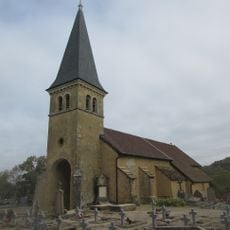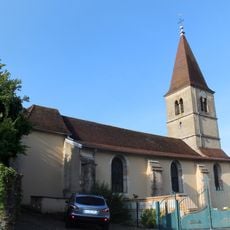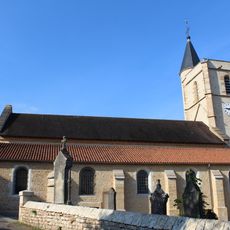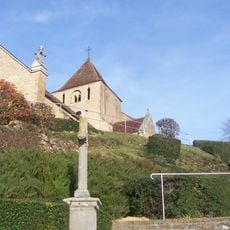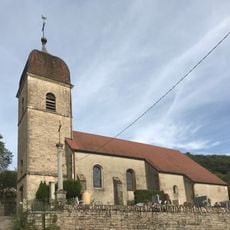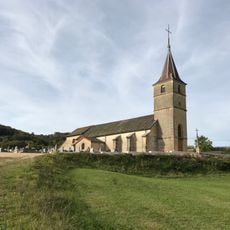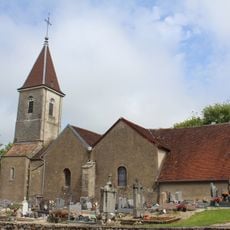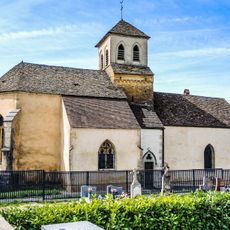
Château de Chevreaux, Medieval castle in Chevreaux, France.
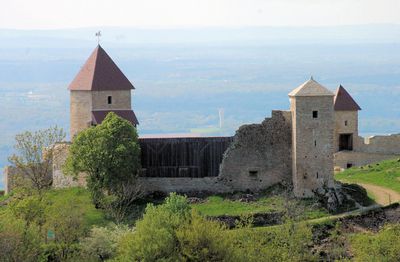
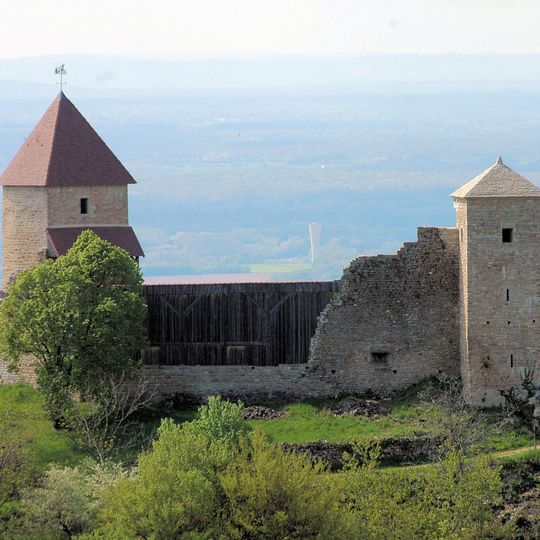
Château de Chevreaux is a ruined stone castle on a rocky outcrop at 473 m, overlooking the Bresse plain in the Jura. Its surviving structures include a square tower with a steep pyramidal dark red-brown roof, a lower adjoining section with a similar roof, and a tall flat-topped rectangular tower with slit openings and a corner turret base. Between the towers, a lower wall has a dark vertical timber palisade set above a pale stone base.
The castle is first documented in 1158, though the lands of "Chevrel" and "Chastel" were given to the monks of Gigny-sur-Suran in 974. It was the seat of a seigneurie held by the Coligny until 1332, the Vienne until 1651, then the Damas. Louis XI had it dismantled around 1480, and on 2 April 1637 the Duke of Longueville took, pillaged and destroyed it during the Ten Years' War.
The name Chevreaux derives from the old forms "Chevrel" and "Chastel" recorded when Manassès III of Coligny gave these lands to the monks of Gigny-sur-Suran in 974. The seigneurie was raised to the title of barony around the start of the 16th century. Since 1990 the association Les Amis de Chevreaux Châtel has run volunteer restoration work camps on the ruins.
The castle is open to the public all year. The ruins stand on a rocky base at 473 m, reached on foot, and the restored sections are looked after by the association Les amis de Chevreaux Châtel, which trains volunteer workers and young people on the site.
Historical records from 1628 show the fortress once contained twelve rooms with fireplaces. These details offer insight today into how the space was once furnished and used in daily life.
The community of curious travelers
AroundUs brings together thousands of curated places, local tips, and hidden gems, enriched daily by 94,137 contributors worldwide.