Cimetière romain de Dabo, Roman necropolis near Walscheid and Dabo, France
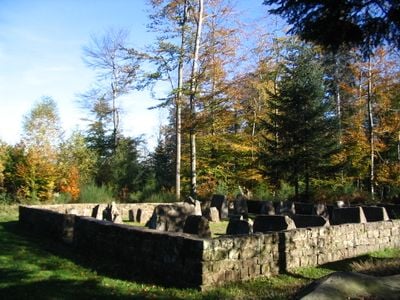
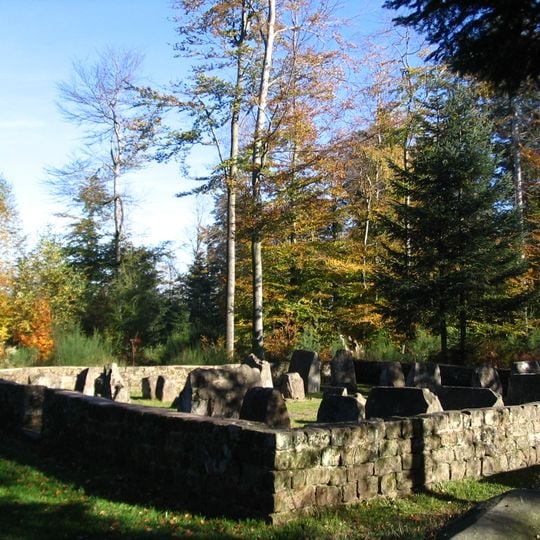
This necropolis is a burial ground with rectangular stones and house-shaped monuments that have openings designed to receive offerings for the dead. The site shows how people in this region practiced burial during the Gallo-Roman period.
The burial ground dates to the Gallo-Roman period and was systematically documented by archaeologist Emil Linckenheld in the 19th century. He gathered house-shaped burial stones from the Beimbach area and enclosed them with a protective wall.
The house-shaped steles are Celtic in origin, yet Roman influence turned some into tall mausoleums with reliefs and statuettes, now kept in the museums of Sarrebourg, Saverne and Metz. The opening cut at the base of each stele was a passage between the dead and the living; plugs found beside the stones were meant to close it.
The site is accessible via the GR53 hiking trail and has three marked paths branching toward Walscheid, Harreberg, and the Hengst Massif. The trails are well signposted and lead through the surrounding countryside.
Many burial stones from this site were moved to regional museums during the 19th century and remain on display today. Visitors who explore collections in Saverne, Strasbourg, Colmar, and Metz can gain deeper insight into the history of the burial ground.
The community of curious travelers
AroundUs brings together thousands of curated places, local tips, and hidden gems, enriched daily by 93,140 contributors worldwide.