Colline de Sion, Limestone mountain peak in Meurthe-et-Moselle, France
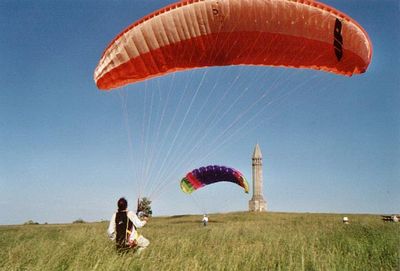
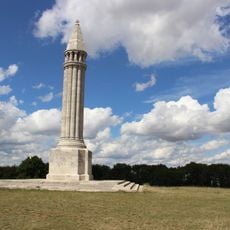
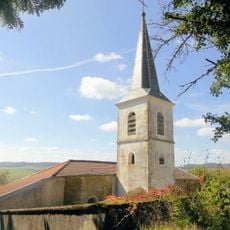
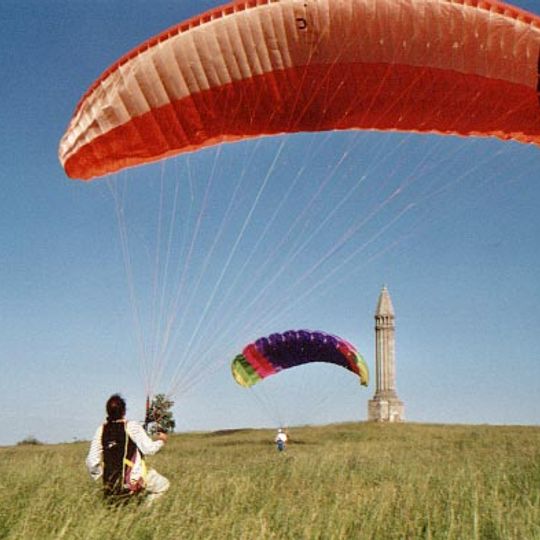
Colline de Sion is a butte-témoin, a remnant limestone hill rising to 540 metres in the Saintois region of Meurthe-et-Moselle. Its slopes are covered with low green vegetation, and a tall, slender pale grey-beige stone tower with a stepped base and a small pointed cap stands on the crest.
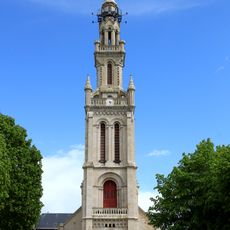
The hill's summit holds the Basilica of Notre-Dame de Sion, a pilgrimage sanctuary whose origins reach back to the Middle Ages. Maurice Barrès made the hill famous with his 1913 novel La Colline inspirée, and the Monument Barrès now marks the highest point of the Lorraine plateau outside the Vosges. Oil was extracted from sandstone 400 to 500 metres below the slopes between 1978 and 1992, with production starting in 1983.
The hill's name comes from the sanctuary of Notre-Dame de Sion, whose basilica draws pilgrims each year. Maurice Barrès made the hill famous in his 1913 novel La Colline inspirée, calling it "a place where the spirit blows". The writer is honoured by the Monument Barrès, the highest point of the Lorraine plateau outside the Vosges.
Walking trails marked along the slope guide visitors to the hilltop where views open out across the surrounding plains and distant mountains. Comfortable hiking shoes suit the terrain better than casual footwear.
The 'Stars of Sion' are fossils of sea lilies, or crinoids, marine animals related to sea urchins. They are most abundant opposite the spot called La Croix Sainte-Marguerite, where soil heaps were left in 1945 by American troops quarrying limestone for the Tantonville airfield.
The community of curious travelers
AroundUs brings together thousands of curated places, local tips, and hidden gems, enriched daily by 92,684 contributors worldwide.