Chevré, Historical complex in La Bouëxière, France
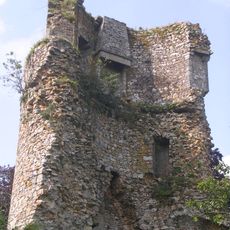
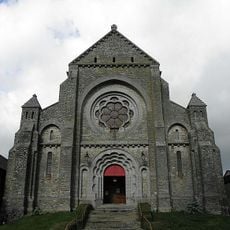
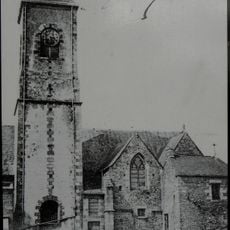
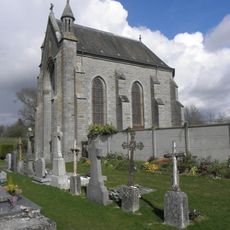
Chevré is the remnant of a 12th–13th-century fortified village in La Bouëxière, southwest of the Chevré pond. Its stone bridge, 15 m long and 4.40 m wide, has seven pointed arches on granite piers and overlooks the pond's spillway where the Veuvre resumes its course. Beside it stand the chapel and the ruins of the keep.
Robert III de Vitré founded the stronghold in 1151, building the chapel of Saint-André and a castle mound, probably with a wooden tower, against the Goranton-Hervé family of nearby Sérigné. Around 1225–1230 André III de Vitré added a stone keep, which Duke Pierre Mauclerc's men took and burned; after the duke's defeat in 1234 André refortified the site with 6,000 livres of compensation.
Chevré was a market town: every Tuesday a fortified market was held there, trading fish from the pond and goat and sheep skins prepared for local clothing. In 1237 André III de Vitré protested when the duke planned a market on the same day at Saint-Aubin-du-Cormier, arguing that Chevré's market was already over a century old. The village still has houses from the Renaissance and the 17th century.
The bridge carries the local road (voie communale no. 20) past the end of the Chevré pond, about 1.9 km from La Bouëxière on the road to Liffré. A second path runs between the château and the chapel to reach the water. The bridge is 15 m long and 4.40 m wide, so it is crossed on foot or by car rather than viewed from a dedicated platform.
The bridge is nicknamed the "Roman bridge" but dates from the 13th century and stands on a Roman road, probably the one from Rennes to Bayeux. Sealing traces in its granite floor slabs suggest reused stone from an earlier structure, perhaps the original Roman bridge.
The community of curious travelers
AroundUs brings together thousands of curated places, local tips, and hidden gems, enriched daily by 92,912 contributors worldwide.