Forges de Dampierre-sur-Blévy, Historical smithy in Maillebois, France.
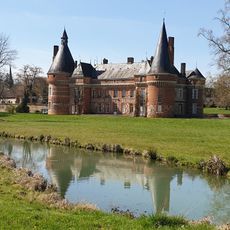
Forges de Dampierre-sur-Blévy is an ironworks on the Blaise with two blast furnaces built side by side in a single building, each with an octagonal chimney. The surviving complex includes the master's house, coal and casting halls, bellows buildings and the clerk's lodging, set beside a 17-hectare pond.
Ironworking at Dampierre-sur-Blévy is documented as early as 1487, when half a furnace below the pond dam was bought by François Courseuilles. The Courseuilles family sold the works in 1669 to Henri Jules de Bourbon-Condé, duc d'Enghien, who had acquired the Senonches forest in 1667 and needed outlets for its wood and ore. Colbert then had naval cannons cast here, along with the cast-iron pipes for the canal de l'Eure in 1688, returned and recast in 1705.
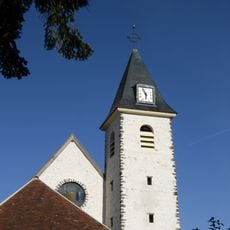
The forge master's house is the only building kept when the works became a private country property in the early 20th century; the workshops and furnaces around it were demolished. The site is linked to the Courseuilles family, several of whom were buried in the church of Dampierre in the 17th century, before they sold the works in 1669 to Henri Jules de Bourbon-Condé, duc d'Enghien.
The remains stand behind the dam of the 17-hectare pond on the Blaise, with the double furnace, coal hall and casting hall grouped near the master's house. The ground between the buildings is grass and uneven stone; allow time to walk the whole circuit. The site is an outdoor monument with no marked visitor route.
In 1688 the twin furnaces cast iron pipes 48 cm in diameter and 1 m long for the canal de l'Eure; when the works were abandoned, the pipes were brought back in 1705 to be melted down again. The same furnaces also supplied cannonballs to Rouen, Le Havre and Saint-Malo.
The community of curious travelers
AroundUs brings together thousands of curated places, local tips, and hidden gems, enriched daily by 92,665 contributors worldwide.