Fort de Vaujours, Military fort in Courtry, France
Fort de Vaujours is a long, single-storey stone fort with a weathered grey facade of rectangular blocks, pierced by a row of tall, round-headed windows and dark doorways; on the left a lower wall opens through a large round-headed archway. The main work is a roughly pentagonal or trapezoidal fort, and two annexes connect to it by a covered way.
Construction of Fort de Vaujours began in 1876 on a pentagonal plan with 48 artillery pieces and a garrison of 691 soldiers, and was completed in 1882 as part of the Séré de Rivières system built to defend Paris after the 1870 defeat. In 1911 it received a machine-gun turret and a Mougin turret with two 155 mm guns, whose guns were later removed. From 1955 the CEA used it as a research centre, where the detonator of Gerboise bleue, France's first atomic bomb, was developed; it closed in 1997.
The fort's name comes from the neighbouring town of Vaujours, though most of its 45 hectares lie in Courtry, Seine-et-Marne. Since the CEA left in 1997 the site has been closed to the public, and residents' associations have campaigned against the open-air gypsum quarry planned by Placoplatre, a Saint-Gobain subsidiary, which would demolish the fort apart from the south battery.
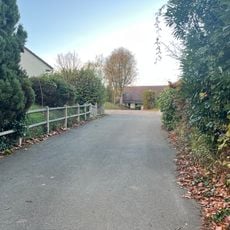
The site requires careful navigation due to its current condition and potential hazards, so visitors should take appropriate precautions. Access may be restricted and the grounds are not maintained for public use.
The Mougin turret for two 155 mm guns is still in place, but its guns were removed. The CEA also fired cold shots involving 600 kg of natural uranium, about 150 kg of which was dispersed around the fort, sometimes up to a kilometre away.
The community of curious travelers
AroundUs brings together thousands of curated places, local tips, and hidden gems, enriched daily by 93,650 contributors worldwide.