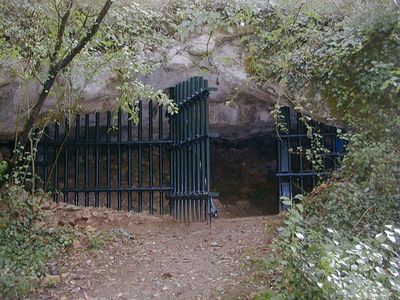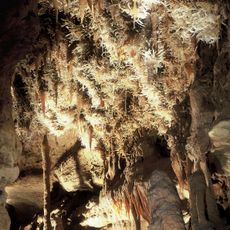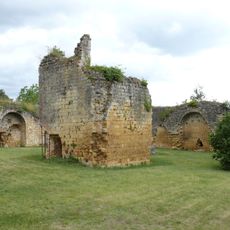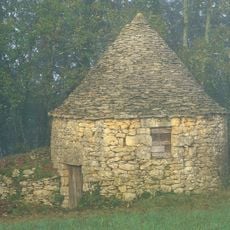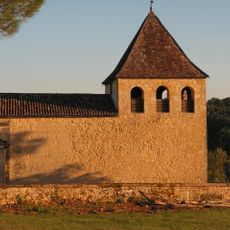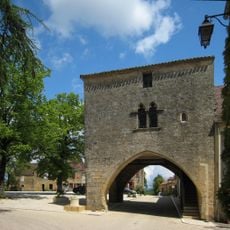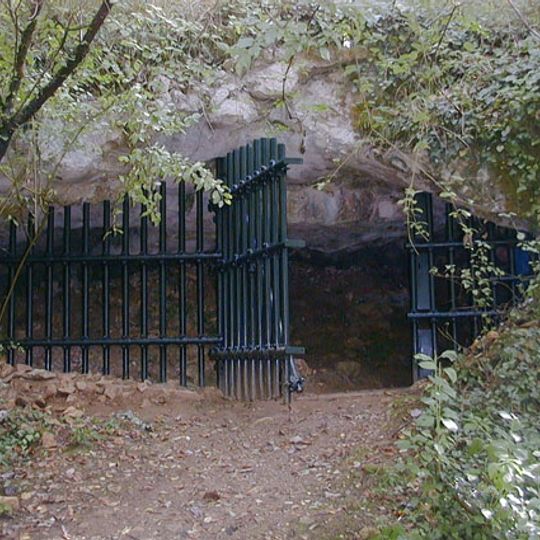
Grotte de Cussac, Paleolithic cave with engravings in Le Buisson-de-Cadouin, France.
Grotte de Cussac is a cave with roughly 1.6 kilometers of passages containing more than 150 animal engravings on clay walls, including mammoths, horses, bison, rhinoceroses, and birds. The artworks spread throughout the cave and record the large animals hunted during this period.
A cave explorer named Marc Delluc discovered the site on September 30, 2000, and French authorities immediately protected it as a historical monument. The engravings themselves were created roughly 25,000 years ago during the Gravettian period.
The cave displays female profile engravings discovered alongside the remains of five individuals from the Gravettian period. This combination of artistic expression and burial space reveals how these early people connected art and sacred practices in one location.
The cave is not open to regular visitors as ongoing scientific research continues there. Those interested in learning more can contact local authorities or regional museums, which often provide information about current studies and potential future public access.
This cave is one of the few places in Europe where Paleolithic wall art survives together with human burials in the same space. Modern 3D mapping techniques now help researchers document every detail of the artworks and understand their significance.
The community of curious travelers
AroundUs brings together thousands of curated places, local tips, and hidden gems, enriched daily by 60,000 contributors worldwide.