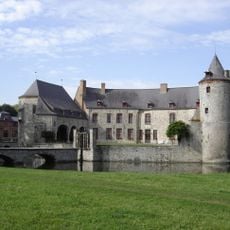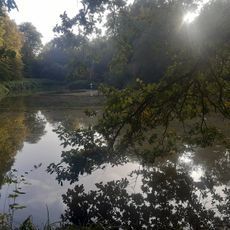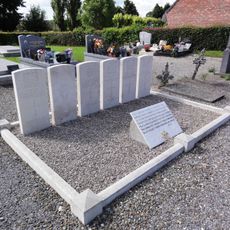
Forêt de Mormal, Ancient forest in Nord department, France
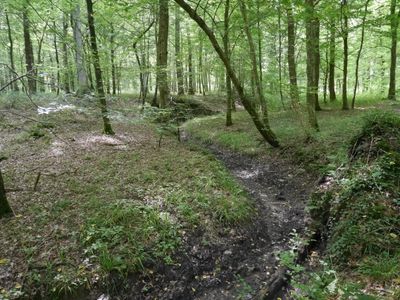
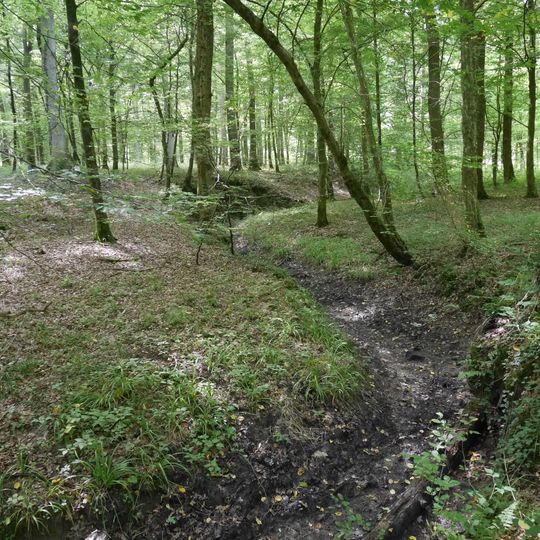
Forêt de Mormal is a 9,163-hectare deciduous forest in the Nord department, near the Belgian border. Pedunculate oak, beech, hornbeam and ash grow closely together, their canopy shading a broad path of wet mud and fallen leaves. The trees are relatively young because the forest was almost entirely cut during the First World War and heavily logged again in the Second.
The forest was intensively exploited from the early Middle Ages and crossed by a Roman road whose straight western edge still marks its limit. In August 1914 its dense terrain and few passable roads forced the British I and II Corps to separate during the retreat from Mons, and German units passed through, surprising Haig's I Corps. Both world wars led to heavy felling, by German occupiers and then by French reconstruction needs.
The forest's straight western edge follows an old Roman road, the chaussée Brunehaut. Roman coins were found under an oak root before 1806. The forest was the remnant of the vast Silva Carbonaria described by early medieval chroniclers.
The forest lies about 10 km southwest of Maubeuge, in the commune of Locquignol, north and west of the Sambre valley. Its western edge is a straight line following an old Roman road, the chaussée Brunehaut. The Ecaillon, Rhonelle and Aunelle streams run through the massif, and the ground is often muddy after rain.
The forest is part of a large European network dedicated to protecting nature and wildlife, where deer, wild boars, and many bird species roam freely. This network connects forests across borders, making this woodland a vital refuge for animals in the region.
The community of curious travelers
AroundUs brings together thousands of curated places, local tips, and hidden gems, enriched daily by 92,722 contributors worldwide.