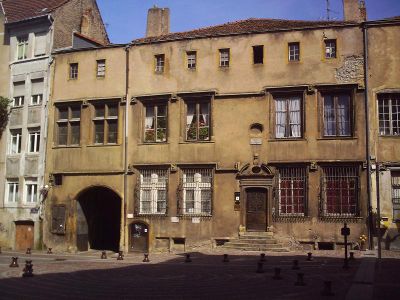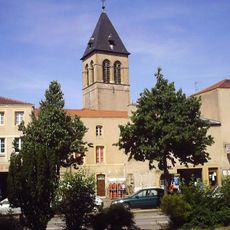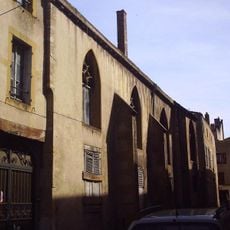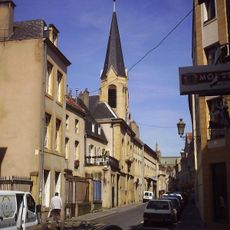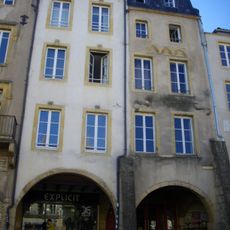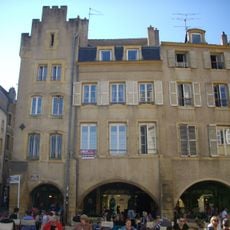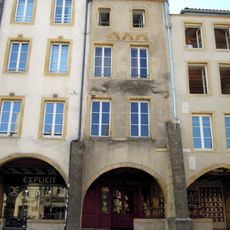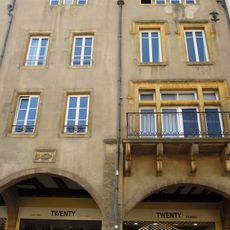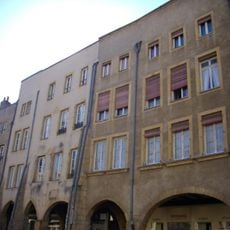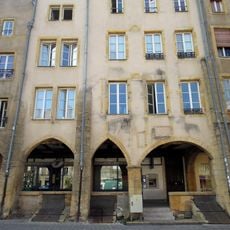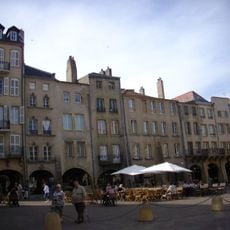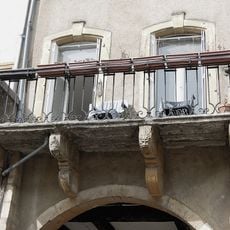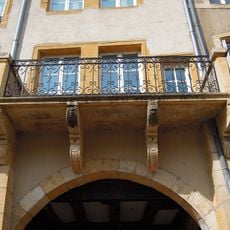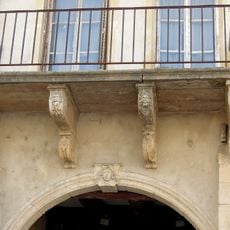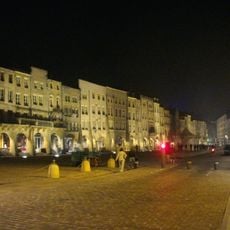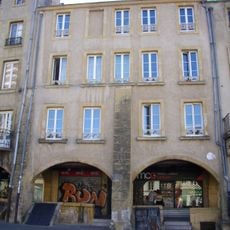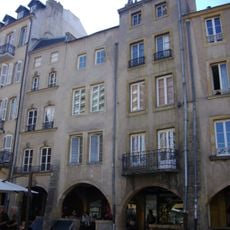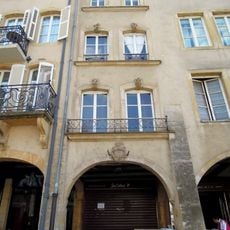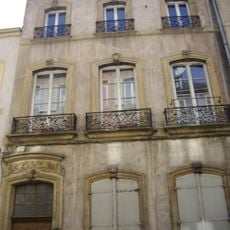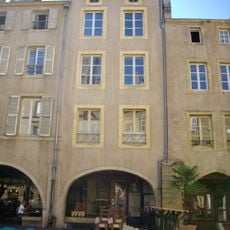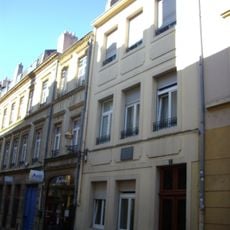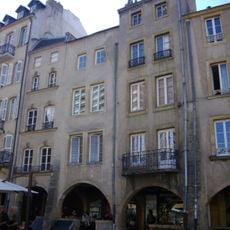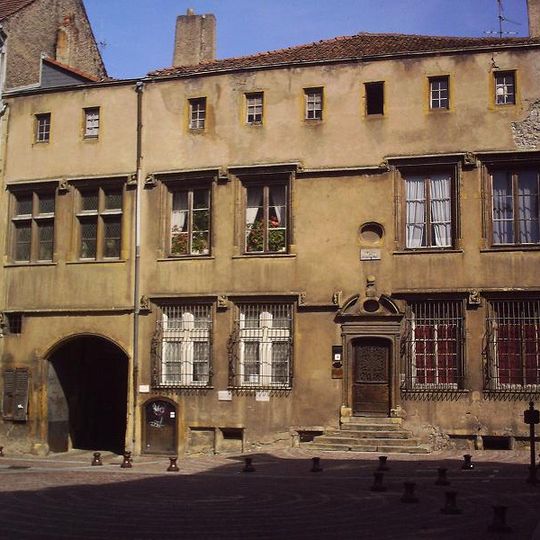
Hôtel de Burtaigne, Renaissance mansion in Outre-Seille district of Metz, France.
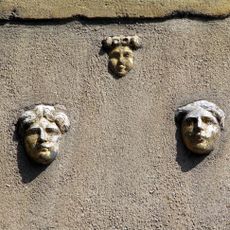
The Hôtel de Burtaigne is a private mansion from the Renaissance era with decorative stone moldings running across its facade and tall windows. The walls feature carved human and fantastical figures integrated into the stonework, showcasing the craftsmanship and resources of its original owners.
The first mention of the Hôtel de Burtaigne dates from 1531, when the wedding of Claude de Gournay, son of the city's master alderman Michel de Gournay, was celebrated there; the gallery collapsed that evening without a single victim. Dendrochronology of the roof beams places construction shortly after 1523. The claim that the Duke of Guise used it as headquarters during the 1552 siege rests on no reliable source.
The Gournay were a paraige family, the patrician lineages that governed the Messine Republic; the house passed in 1551 to Jacques de Gournay, master-échevin of Metz in April 1552, when Henri II entered the city. The moulded bands above the windows carry crenellated frettes carved with fantastic grotesques and a lion holding a shield, a motif also found on the Maison des Têtes.
The mansion stands at 4 and 6 place des Charrons, in the Outre-Seille district across the Seille from the old market square of Champ-à-Seille (now place Coislin). The pedestrian door on the street, reached by five steps, and the carriage entrance are visible from the public square; the interior is not open to visitors.
The claim that the Duke of Guise used the mansion as headquarters during the 1552 siege is a persistent legend unsupported by any reliable source, and it contradicts the main account of the siege. The story of the gallery collapsing during Claude de Gournay's wedding to Catherine de Créhange, recorded in the Metz chronicles, is better attested.
The community of curious travelers
AroundUs brings together thousands of curated places, local tips, and hidden gems, enriched daily by 93,771 contributors worldwide.