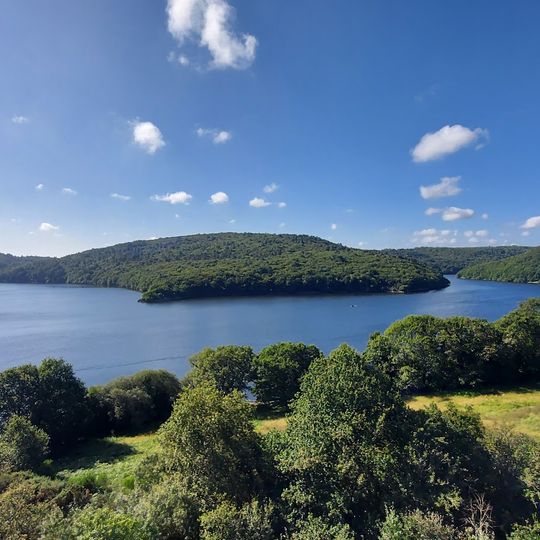
Lake Guerlédan, Artificial lake in Brittany, France
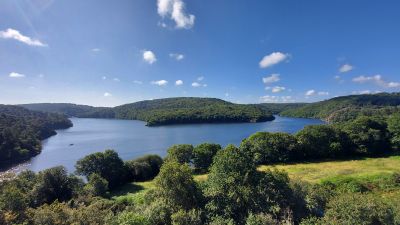
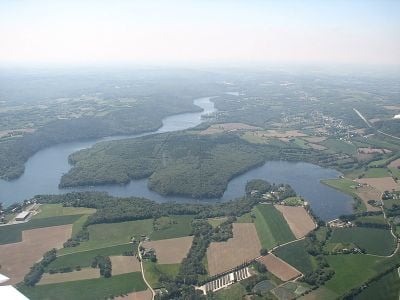
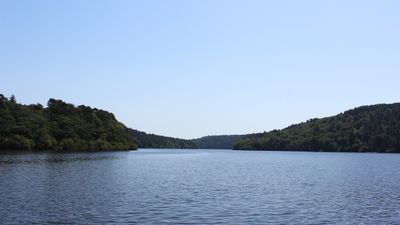
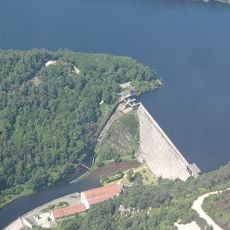
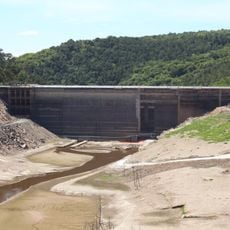
Lake Guerlédan is a reservoir in central Brittany that stretches 12 kilometers (7.5 miles) between Morbihan and Côtes-d'Armor. The water covers a former slate valley and now forms the largest artificial lake in the region.
Construction of the dam took place between 1923 and 1930, submerging 17 locks of the Nantes-Brest canal. The project transformed the valley into a reservoir that now serves power generation and recreation.
The lake's name comes from the hamlet of Guerlédan, from the Breton Gouer ledan, "broad streamlet", referring to the Blavet widening here. The 40 km shoreline is fully waymarked, and the roundabout of the lake and the Tregnanton cove are known viewpoints over its wilder side.
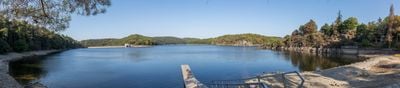
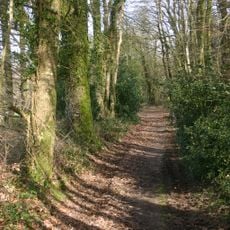
Several beaches and coves around the water allow swimming, while marked zones support water skiing, kayaking, and paddle boarding. Footpaths follow the shoreline and give access to viewpoints and shaded rest areas.
During World War II, Breton nationalist architect James Bouillé proposed building a new Breton capital called "Brittia" on the lake's shores, which he described as a "Celtic Brasilia". The plan never left the drawing board.
The community of curious travelers
AroundUs brings together thousands of curated places, local tips, and hidden gems, enriched daily by 93,517 contributors worldwide.