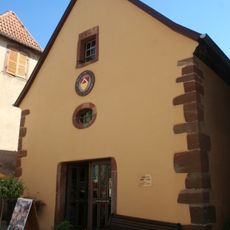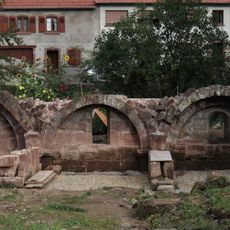
Maison des Rochers de Graufthal, Ancient rock dwelling in Eschbourg, France
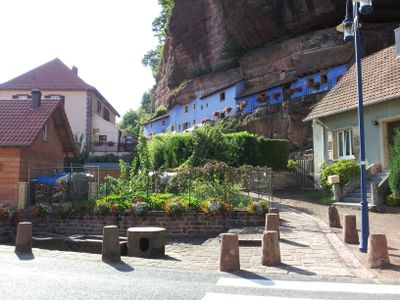
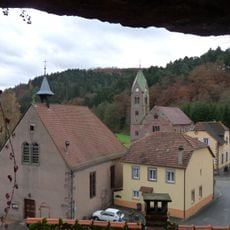
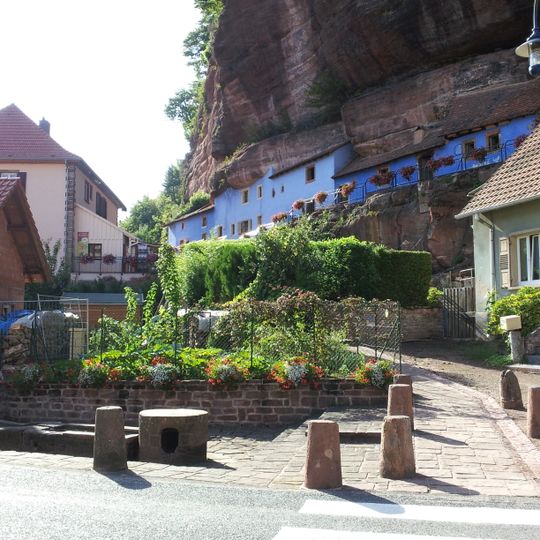
The Maison des Rochers de Graufthal consists of three houses built partially into red sandstone cliffs that rise about 23 feet (7 meters) above the village street. The rock faces themselves form the back walls and often the ceilings of these living spaces.
Archaeologists Robert Forrer and Charles Spindler excavated the site in 1899 and dated the first rock cavities to the Middle Ages, when they served as granaries, their wooden posts leaving holes still visible in the stone. The cavities became makeshift dwellings in the 17th century and proper houses in the 18th, one door lintel bearing the date 1760. Three families lived here in the 20th century; Catherine Ottermann, called "Felsekaeth", was the last, dying in 1958. The houses were listed as historical monuments on 20 December 1988.
These rock houses show how people in this region integrated their homes directly into the stone, using the natural cliffs as walls and ceilings. You can still see how resourcefully and skillfully the inhabitants worked with their surroundings.
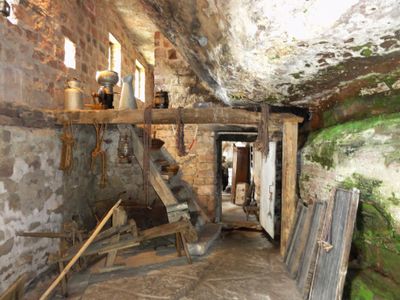
The three rock houses sit in the first rock shelter, about 7 metres above the village street, reached by a footpath. The ground floor holds a kitchen, a living room and a stable, with a dormitory, hayloft and granary above. The kitchen was shared by two houses.
Interestingly, some rooms combine natural rock ceilings with artificially added tile roofs to close gaps and keep water out. A historic match factory operated in one of the upper shelters, reminding visitors of the industrial use of this unusual location.
The community of curious travelers
AroundUs brings together thousands of curated places, local tips, and hidden gems, enriched daily by 94,001 contributors worldwide.