Les Fieux Cave, Prehistoric art cave in Miers, France
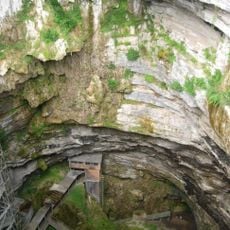
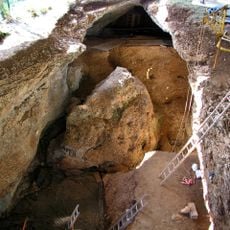
Les Fieux Cave in Miers consists of a single hall about 30 metres long and 15 metres wide, reached through a low corridor some 20 metres long. Its walls bear thirteen complete negative hands, eleven red and two black, along with finger dots and red sticks. In the centre of the hall, a stalagmite-covered block carries engravings and peckings: an ibex, two mammoths, a horse's dorsal line and a tectiform.
The decorated cave was discovered on 2 November 1964 by owner E. Caminade and a Spéléo-Club de Bergerac team seeking a route to the Padirac underground river; they opened a narrow passage and soon noted negative handprints. It was classed a Monument historique on 17 January 1967, and the parcel was added to the supplementary inventory on 9 February 1993. Excavations resumed in December 2006 ahead of the public opening.
The site presents photographs and films documenting the decorations while offering demonstrations of ancient techniques such as flint knapping, fire-making, and hunting methods. Visitors can watch these practical activities and gain insight into how people lived during that era.
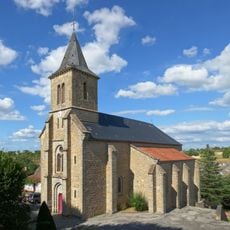
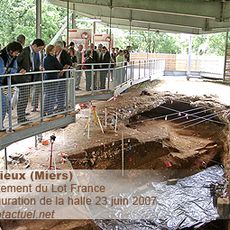
The site has been open to visitors since June 2007, after a protective structure was built over the deposits in 2005; the public area of locus 2 was inaugurated on 23 June 2007. Access is from the village of Miers, in the Lot department. Excavations have continued each year since December 2006, so some areas may be closed off for research.
The cave's decorated hall is about 30 metres long and 15 metres wide, reached through a low corridor some 20 metres long. Inside, 13 complete negative hands survive, 11 red and 2 black, along with finger dots and red rods. A stalagmite-covered block at the centre of the hall carries engravings and pecking: an ibex, two mammoths, a horse's dorsal line and a tectiform.
The community of curious travelers
AroundUs brings together thousands of curated places, local tips, and hidden gems, enriched daily by 92,969 contributors worldwide.