Musée de plein air de Villeneuve-d'Ascq, Rural architecture museum in Villeneuve-d'Ascq, France.
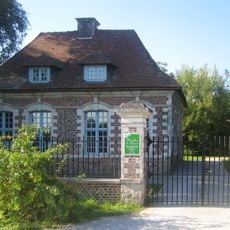
The Musée de plein air de Villeneuve-d'Ascq is an open-air museum in the Val de Marque holding about twenty rural buildings from Artois, Flanders, Picardy and Hainaut, mostly 17th to 19th century, rebuilt in a fourteen-hectare park. Cottages, barns, sheepfolds and a forge use timber framing, brick and cob, with roofs of tile or thatch. One brick cottage has a steep clay-tile roof, two tall chimneys and white-shuttered windows.
The museum opened in 2007, but its collection began in the 1990s, when the Association for the Safeguarding of Rural Heritage started moving about twenty old buildings from the Nord-Pas-de-Calais region to the site. The buildings date from the 16th to the 19th century and were saved from ruin or demolition for roads and railways. The Métropole Européenne de Lille now manages the museum.
Craftspeople such as stonemasons, blacksmiths, carpenters and saddlers work on site, keeping traditional trades alive. One forge carries the Latin inscription "Stat rosa pristina nomine, nomina nuda tenemus", a line from Bernard of Cluny made famous by Umberto Eco's novel The Name of the Rose. The museum also keeps regional breeds such as giant Flemish rabbits, Boulonnais sheep and Flemish geese.
The grounds are spacious and require comfortable shoes for walking between buildings spread across the site. Shaded areas under trees and picnic spots are available if you want to rest during your visit.
Some buildings were restored with original materials like thatched roofs or mud bricks to keep their authentic appearance. These reconstructions reveal building techniques and materials that are rarely used in modern construction.
The community of curious travelers
AroundUs brings together thousands of curated places, local tips, and hidden gems, enriched daily by 94,114 contributors worldwide.