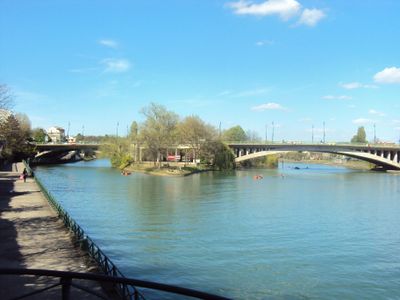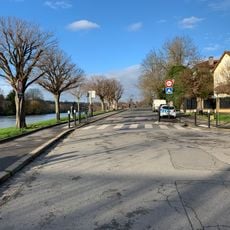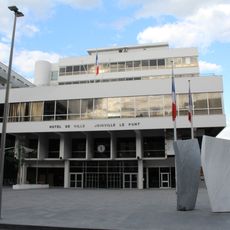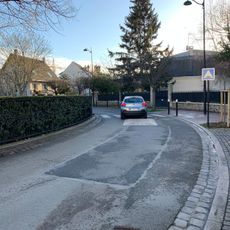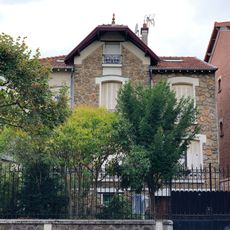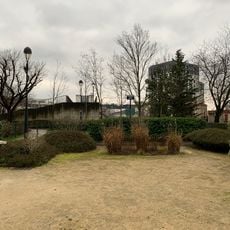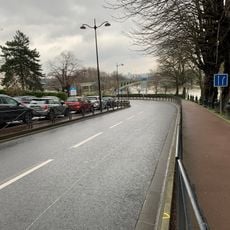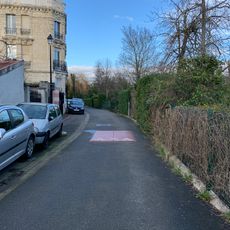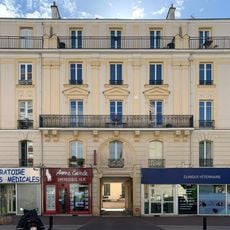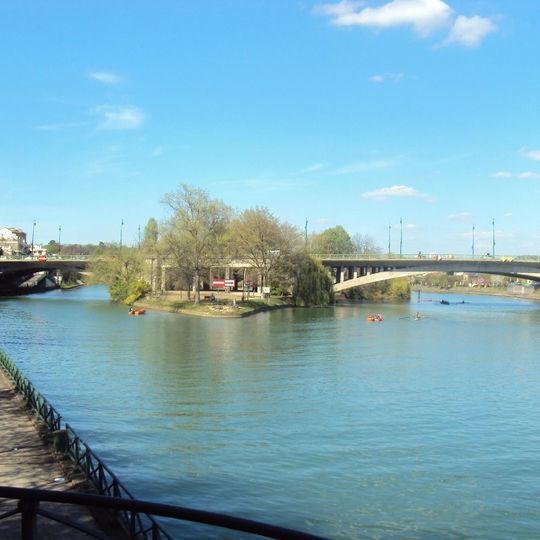
Pont de Joinville, Concrete bridge in Joinville-le-Pont, France.
Pont de Joinville is a concrete bridge spanning the Marne River that links different parts of the suburban community southeast of Paris. The structure was recognized for its architectural importance and included in France's cultural heritage inventory.
A portus, or landing stage, preceded the bridges on this site; Louis VI granted the Abbey of Saint-Maur the toll of three sous for the crossing in 1110. The first wooden bridge was built in 1205 under an agreement between Bishop Eudes de Sully and the monks, and was repeatedly destroyed by wars and floods. A seven-arch stone bridge replaced it in 1716-1718, and the current concrete structure dates from 1937, designed by architect Tourry with engineers Giguet and Cosmi; cars could use it from 1943. The name Pont de Joinville was adopted in 1835, after earlier names including pont Olin, pont aux Moulins and pont de Saint-Maur.
The bridge's successive names record its past: Pont Olin from the 13th to the 16th century, Pont aux Moulins from the 16th to the 18th century, then Pont de Saint-Maur until the early 19th century. It has been called Pont de Joinville since 1835. A pedestrian staircase links the deck to Île Fanac.
The bridge is accessible to both vehicles and pedestrians crossing the river for daily transportation needs. Usage is possible throughout the year, though water levels may vary seasonally and during heavy weather.
The concrete construction of Pont de Joinville demonstrates engineering methods that have maintained structural stability throughout years of continuous use.
The community of curious travelers
AroundUs brings together thousands of curated places, local tips, and hidden gems, enriched daily by 93,129 contributors worldwide.