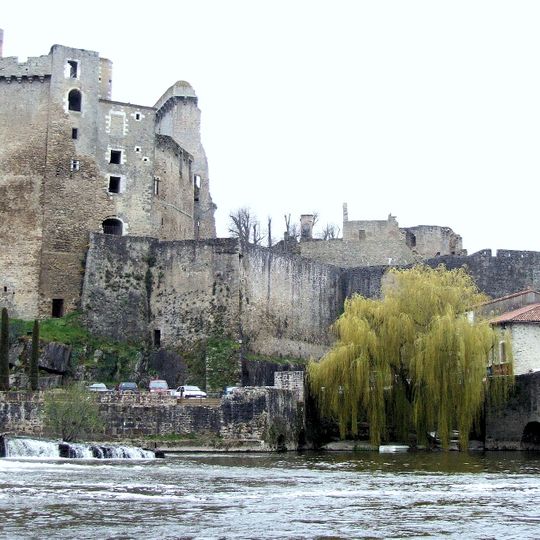
Pont de la Vallée, Clisson, bridge in France
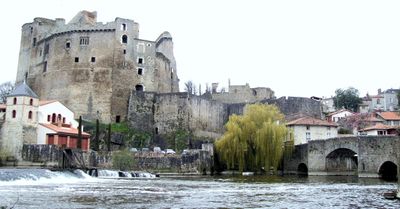
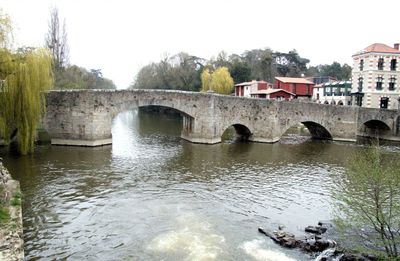
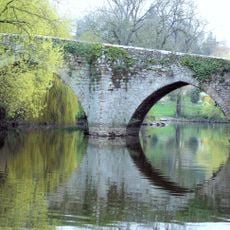
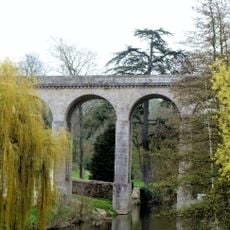
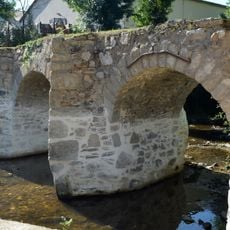
The Pont de la Vallée is a stone bridge in Clisson with six arches of varying sizes spanning the Sèvre Nantaise river. The widest arch stretches over 10 meters (33 feet), while narrower ones measure around 4 meters (13 feet), supported by thick piles with pointed fronts that help manage water flow and protect against erosion.
A wooden bridge on this site was reported ruined in the winter of 1741, when carts could no longer cross, and repairs were ordered by the Count. A 1769 inspection still found it built of wood and in poor condition, with water mills beside it, linking Clisson to its La Trinité suburb on the Nantes–Poitiers road. The stone piers already existed in the 18th century, but the present masonry structure dates from the late 18th or early 19th century. It was classified as a monument historique on 20 March 1922.
The bridge carried the main road from Nantes to Poitiers, linking Clisson with its faubourg de la Trinité; a 1769 report notes it served only that communication. Water mills stood against it at the time. The name "pont de la Vallée" is the French form, rendered Pont an Draoñienn in Breton.
The bridge carries the road over the Sèvre Nantaise and can be crossed on foot or by car. Its deck is flat and narrow, with a low parapet on both sides. The triangular cutwaters on the upstream piers are best seen from the riverbank at low water.
The piers predate the present deck: a 1759 road plan already shows them with triangular cutwaters, while a 1769 inspection found a wooden bridge in poor condition beside water mills. The stone arches seen today were not built before the late 18th or early 19th century. The bridge was classified as a monument historique on 20 March 1922.
The community of curious travelers
AroundUs brings together thousands of curated places, local tips, and hidden gems, enriched daily by 92,816 contributors worldwide.