Prieuré de Saint-André-de-Rosans, Romanesque monastery ruins in Saint-André-de-Rosans, France
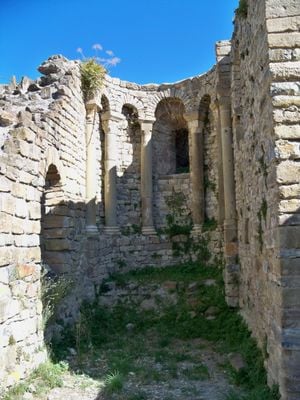
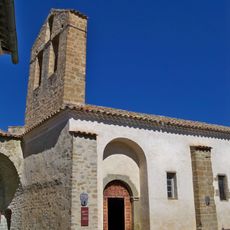
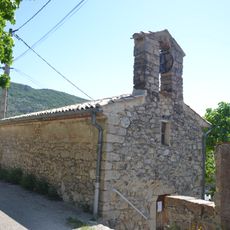
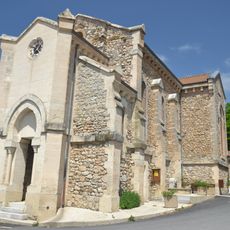
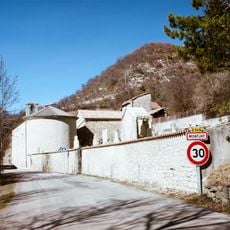
The Prieuré de Saint-André-de-Rosans is a ruined Romanesque church in Saint-André-de-Rosans, Hautes-Alpes. Its surviving apse has a curved wall of rough light-brown stone masonry and four slender greyish columns on low bases, with worn capitals supporting arches. A dark arched opening appears between the two central columns, and a small arched niche sits high on the left wall.
The priory was founded in 988 when a cleric named Richaud donated it to Cluny Abbey. Over time, it extended its influence across multiple communes throughout the Hautes-Alpes and Drôme regions.
Until the 19th century the carved vine-scroll friezes led visitors to mistake the church for a temple of Bacchus. Specialists identified the leaves as those of the Paga Debiti grape, a variety tied to the priory's wine-growing setting near the Drôme border.
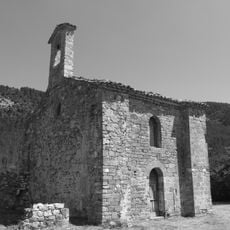
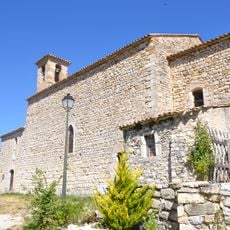
The ruins stand in the open on the edge of Saint-André-de-Rosans, in the Hautes-Alpes; the site is classified as a monument historique, so access is on foot and the ground is uneven. The apse with its four columns and the surviving choir and transept are best seen in low morning or evening light. Allow time to walk the whole perimeter, since the nave and transept lie beyond the curved section.
The mosaic pavements were created by the same workshop that decorated Notre-Dame de Ganagobie Abbey nearby. This connection reveals a regional network of specialized craftspeople working in Provencal Romanesque art.
The community of curious travelers
AroundUs brings together thousands of curated places, local tips, and hidden gems, enriched daily by 94,659 contributors worldwide.