Ruines gallo-romaines des Cars, Roman archaeological site on Plateau de Millevaches, France.
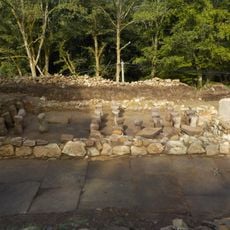
Ruines gallo-romaines des Cars is an archaeological site straddling Saint-Merd-les-Oussines and Pérols-sur-Vézère, with two granite mausoleums and a villa near a stream. The mausoleums were built with large granite blocks joined by metal clamps, and the villa had a covered gallery around an inner courtyard, mosaics, painted plaster, and baths.
The funerary monuments were built in the late 2nd or early 3rd century CE, and the villa was rebuilt and enlarged at the same period, probably after a fire. In the 3rd century CE, barbarians pillaged the site for the metal clamps that held the granite blocks, leaving the stones scattered as seen today. The site was classified as a monument historique on 11 September 1935.
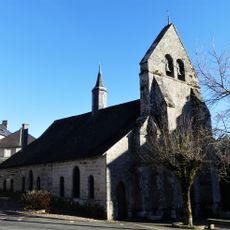
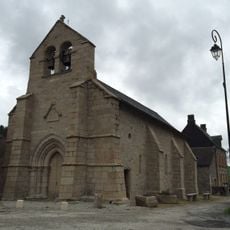
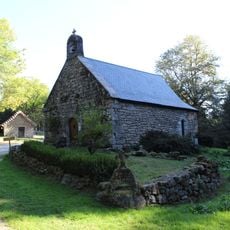
The name Les Cars comes from the Latin quadratus, a large cut stone block. The larger of the two mausoleums held the ashes of the familiae — family members and slaves — in a granite chest carved with a boar hunt, a sport reserved for the Empire's elite. That chest now serves as a baptismal font in the Saint-Léonard chapel at Barsanges, a few kilometres away.
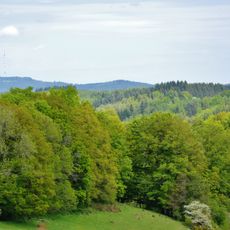
The ruins lie in fields and woods on the Millevaches plateau, straddling the communes of Saint-Merd-les-Oussines and Pérols-sur-Vézère. The carved granite funerary chest found in the second mausoleum is kept a few kilometres away in the Chapelle Saint-Léonard de Barsanges, where it serves as a baptismal font. Objects from the excavations are displayed at the museum in Meymac.
The octagonal granite chest from the larger mausoleum, carved with a boar-hunting scene, was later reused as a baptismal font in the Saint-Léonard chapel at Barsanges. A hypertrophied phallus and a snake were added to the carving, and the font was moved out to the parvis before returning inside in 2002.
The community of curious travelers
AroundUs brings together thousands of curated places, local tips, and hidden gems, enriched daily by 92,820 contributors worldwide.