Réserve naturelle régionale de la mine du Verdy, Regional nature reserve near Pollionnay, France
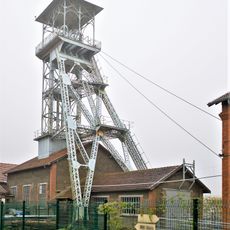
The Réserve naturelle régionale de la mine du Verdy is a regional nature reserve near Pollionnay, in the Monts du Lyonnais area of eastern France. It consists of a former fluorite and barite mine whose underground galleries and surrounding parcel are now protected as a natural monument.
The Verdy mine was discovered in 1890 and worked for barite, then from 1915 for fluorite, producing 8,500 tonnes of ore before abandonment around 1940. It served as an illegal dump for 40 years until naturalists rediscovered it in 1985. FRAPNA bought the plot in February 1988, removed 200 m³ of waste, and the site became a voluntary nature reserve in 1990 and a regional one in 2008.
The reserve takes its name from the Verdy mine, worked for barite from 1890 and for fluorite from 1915. Its classification rests on the mine's role as a bat roost: 10 of the 30 chiropteran species found in Rhône-Alpes occur here, all protected at European level, including the Barbastelle d'Europe and the Petit rhinolophe, the most widespread in the galleries.
The mine entrance is closed to the public: intrusions are punishable by fines and prison sentences, and rockfalls are frequent inside the 350 metres of galleries. The reserve covers only the small cadastral parcel around the entrance, so there is no marked trail network to follow. Observation is therefore limited to the surface, where noise should be kept down for the bats.
At 0.0535 hectares, it is the smallest nature reserve in France, yet more than 500 species have been recorded there. The galleries also shelter Niphargus aquilex, a small freshwater crustacean found in the water-filled sections.
The community of curious travelers
AroundUs brings together thousands of curated places, local tips, and hidden gems, enriched daily by 94,658 contributors worldwide.