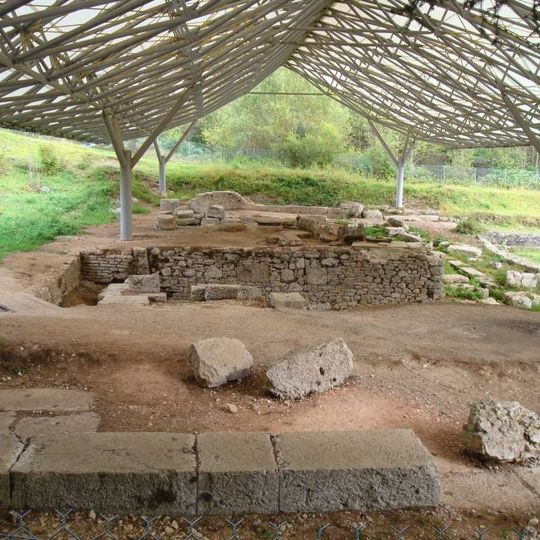
Sanctuaire gallo-romain de Villards d’Héria, Ancient sanctuary in Villards-d'Héria, France
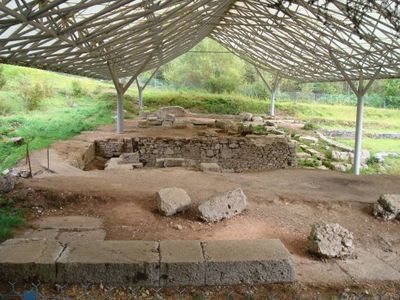
The Sanctuaire gallo-romain de Villards d'Héria is an archaeological complex with temple ruins, a sacred spring, and multiple ritual pools connected by platforms along the Héria stream. The remains reveal how different zones served distinct purposes in conducting religious ceremonies.
This religious center served the Sequani people from the 1st to 3rd centuries, demonstrating Roman influence in what is now Franche-Comté. Systematic excavations between 1960 and 1982 revealed the site's layout and religious function.
The sanctuary belonged to the Sequani, a Gallic people whose territory roughly matches present-day Franche-Comté. Its ancient name is unknown, and no nearby Gallo-Roman town has been confirmed. The site is mentioned from the 16th century and was studied by Pierre-Joseph Dunod at the end of the 17th century.
The site is open to visitors only a few days each summer, and a free online virtual tour is also available. Access is on foot along the Héria valley between Villards-d'Héria and Jeurre; the excavated area is uneven and partly exposed, so wear sturdy shoes.
The site's name comes not from the sanctuary but from a Roman bridge over the Héria, the Pont des Arches, whose remains stand nearby. The sanctuary itself was built around a resurgence of the Héria stream, and its ancient name is still unknown. Excavations resumed in 2019 and are scheduled to run until 2025.
The community of curious travelers
AroundUs brings together thousands of curated places, local tips, and hidden gems, enriched daily by 94,327 contributors worldwide.