Square de la Place-Dauphine, Urban park in Île de la Cité, Paris, France.
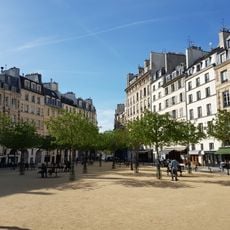
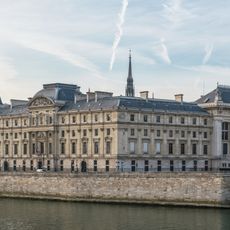
The square de la Place-Dauphine is a 2,665 m² green space on Île de la Cité, framed by the rue de Harlay and the place Dauphine behind the Palais de Justice. Its open ground is surfaced in pale sand or gravel, edged by low green metal fences and posts, with green metal benches and thin saplings set at intervals; a small dark kiosk stands at one edge.
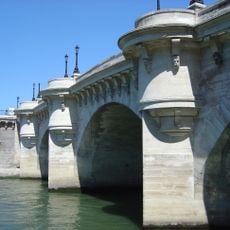
King Henry IV initiated development of the site in 1607 as part of his urban renewal plan, which also included the Pont Neuf bridge. The square was subsequently built with consistent architecture following a unified design to create a harmonious ensemble.
The square takes its name from the neighbouring Place Dauphine, on which it largely sits; the place was named for the Dauphin, the future Louis XIII, born in 1601. During the Revolution the square was renamed place de Thionville, from 1792 to 1814. The green space itself was laid out in 1970, and its construction site appears in Gérard Oury's 1969 film Le Cerveau.
The square is reachable via the Pont Neuf and Cité Metro stations, which are both centrally located and easily accessible. It sits in a walkable area near other sites on Île de la Cité, making it simple to visit along with nearby landmarks.
The square was laid out in 1970, and its construction site appears in Gérard Oury's 1969 film Le Cerveau. Number 26 on the adjoining Place Dauphine is thought to mark the spot where Jacques de Molay, last master of the Knights Templar, was burned in March 1314.
The community of curious travelers
AroundUs brings together thousands of curated places, local tips, and hidden gems, enriched daily by 92,894 contributors worldwide.