Villa of Séviac, Archaeological villa in Montréal, France.
Villa of Séviac is a Gallo-Roman residence laid out around a 30-metre-square courtyard-garden bordered by colonnaded galleries, with rooms of varied size and use behind them. Domestic rooms stand to the north, a large vestibule and a heated apsidal reception room to the east, and baths of over 500 m² to the south. Two pale column shafts stand among the low stone wall foundations.
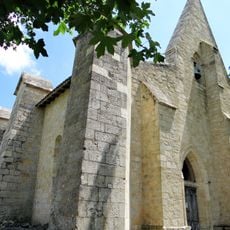
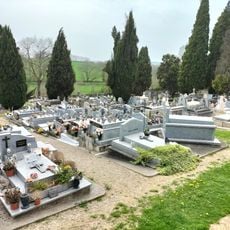
A modest building stood here from the mid-1st century AD; a villa was built in the 2nd century and enlarged over time, then restructured in the last third of the 4th century around a 30-metre courtyard. In the early 6th century a baptistery was added, and the complex remained partly occupied by an aristocrat through that century. In the 7th century houses were built among the ruins, and between the 8th and 11th centuries the site held a church and necropolis.
The baths, over 500 m² in the early 5th century, were split into two sectors on either side of the frigidarium. The western part held a tepidarium and a caldarium, each with its own basin, heated by floor and walls, plus latrines. The eastern rooms, once heated reception spaces, became a cold sector in the 5th century.
The excavated area lies on a plateau at the confluence of the Auzoue and the Argentans, about twelve kilometres from Eauze. The mosaics, restored from the 1990s and covering some 625 square metres by 2018, are sheltered by a translucent roof of 2,070 square metres. The northern domestic rooms facing the pars rustica remain largely unexcavated.
A bronze toe 5 cm long and weighing 390 g, found in 1910, belonged to a monumental statue that has never been recovered; the toe itself has since disappeared. The site also yielded Pyrenean marble pilaster capitals carved around 420–440 and a marble head from about 400.
The community of curious travelers
AroundUs brings together thousands of curated places, local tips, and hidden gems, enriched daily by 94,047 contributors worldwide.