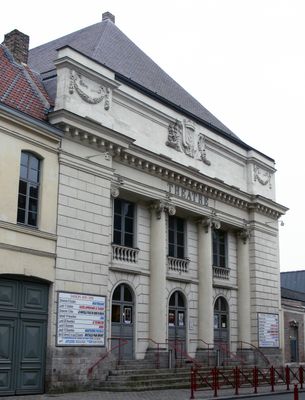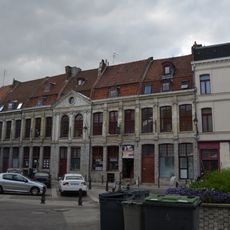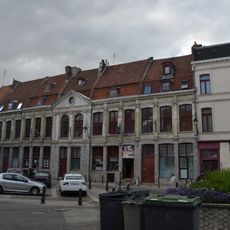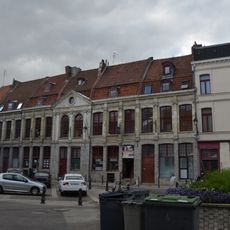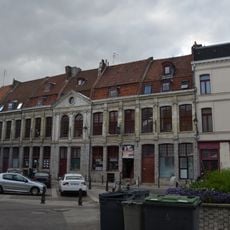
Théâtre de Douai, Historic Italian-style theater in Douai, France.
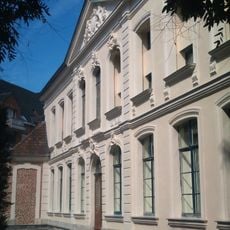
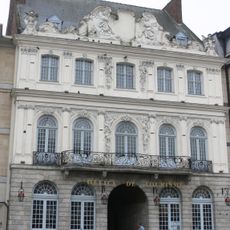
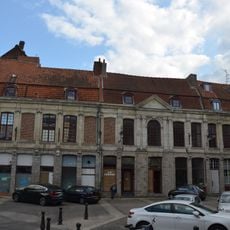
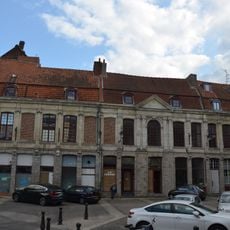
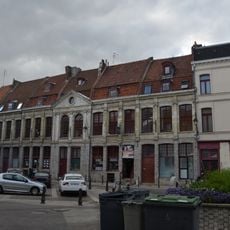
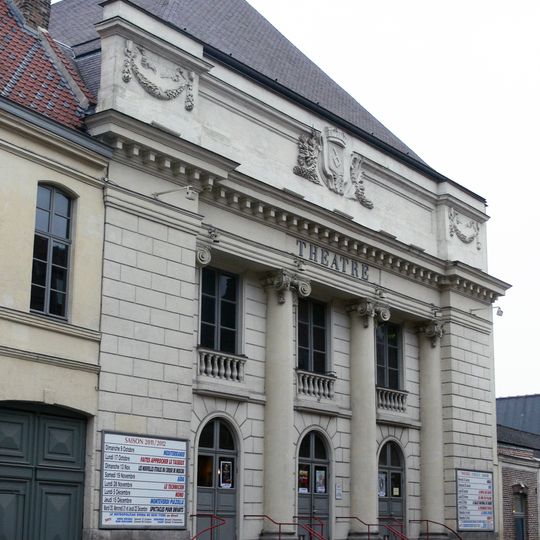
The Théâtre de Douai is an Italian-style theatre on rue de la Comédie, built from 1783 and opened on 4 December 1785. Its light stone facade carries a frieze inscribed "THEATRE" above four scrolled columns and three arched glazed doors, with a carved crest and garlands above. Inside, the horseshoe-shaped hall has a parterre, baignoires and three tiers of balconies, and the stage lintel shows three Muses: Thalia, Melpomene and Euterpe.
In July 1783 the aldermen entrusted Charles-Louis-Barthélémy Denis with building a performance hall; the first performance took place on 4 December 1785. The town bought the theatre in 1810 and commissioned sets from Ciceri. Damaged in the First World War, it was repainted in 1922-1923 by Maurice Rogerol and classified as a monument historique in May 2003.
The stage lintel shows three Greek Muses: Thalia for comedy, Melpomène for song and tragedy, and Euterpe for music. Each spring, the week before the spring holidays, the theatre hosts "Théâtre en Fête", presenting work by local associations, school theatre classes and college dance workshops.
Access to the auditorium is through a vestibule on rue de la Comédie: the Côté cour staircase leads to the balconies and boxes, the Côté jardin staircase to the Paradis, the top tier. The reception salon on the first floor, above the vestibule, looks out onto the street. The theatre was closed for two years of safety works and reopened in 2007 for its 222nd season.
The theatre keeps its original stage machinery and sets, including four painted sets ordered in 1785 from Charles-Alexandre-Joseph Caullet and restored by Ciceri in 1810. In the balcony boxes, the small period chairs still survive, sized to the shorter stature of eighteenth-century spectators.
The community of curious travelers
AroundUs brings together thousands of curated places, local tips, and hidden gems, enriched daily by 92,892 contributors worldwide.