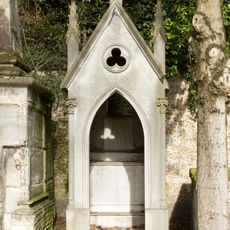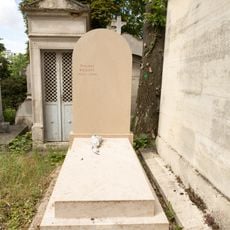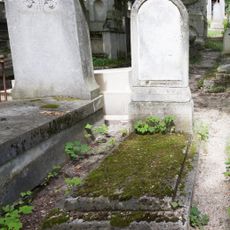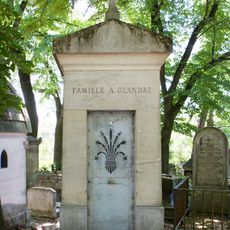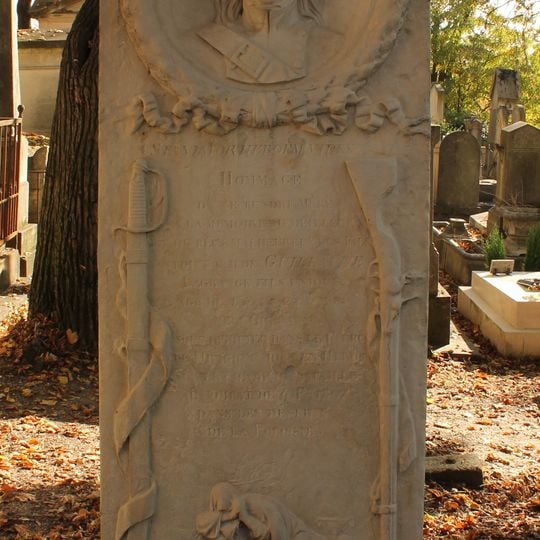
Tombe du Dragon, Monument sculpture in Père Lachaise Cemetery, France
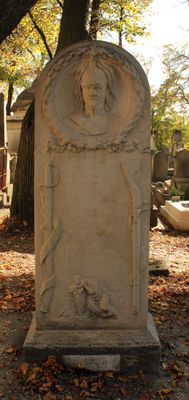
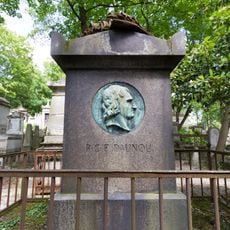
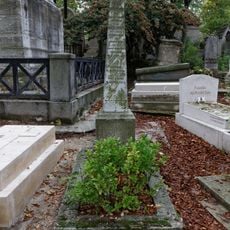
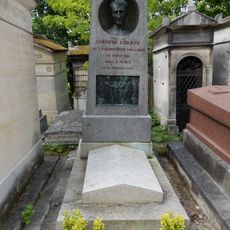
The Dragon Tomb is a tall, rectangular pale grey stone stele in Division 29 of Père Lachaise Cemetery, made by architect Étienne-Hippolyte Godde. A circular relief bust of Antoine de Guillaume-Lagrange sits at the top above a draped flag; carved inscriptions begin "STA VIATOR, HEROEM VIDES" and "Hommage". A sword with tassel runs down the left edge, a long rifle down the right, and a carved wreath lies at the base, with a veiled kneeling woman beside a funeral urn.
Antoine de Guillaume-Lagrange, a 25-year-old non-commissioned officer of the 16th Dragoon Regiment, fell on 4 February 1807 in Poland. On 16 December 1808 his mother obtained a perpetual plot to raise a cenotaph, built around 1809 and cited as early as 1817. During the Restoration Bonapartists gathered here, so the authorities rerouted the paths around it. It was listed as a monument historique on 14 November 1983.
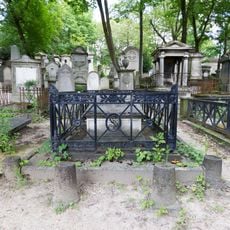
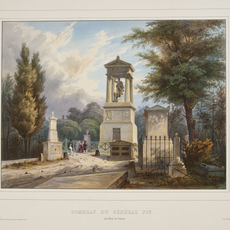
The grove around the stele has been called the "bosquet du Dragon" since at least 1836. During the Restoration, Bonapartists gathered here at the tomb of the young cavalryman; to stop these meetings, the authorities altered the surrounding roads and built around the monument.
The monument is located in section 29 of the cemetery and is best visited during regular opening hours. Comfortable shoes are recommended since the grounds are hilly and most people explore the site on foot.
The Latin epitaph opens "STA VIATOR, HEROEM VIDES" (Stop, traveller, you see a hero), a direct address to passers-by. The reverse side records his last words on the battlefield: "Ma mère ! ma pauvre mère !" The stele was carved by Étienne-Hippolyte Godde, architect of the cemetery's main gate.
The community of curious travelers
AroundUs brings together thousands of curated places, local tips, and hidden gems, enriched daily by 93,816 contributors worldwide.