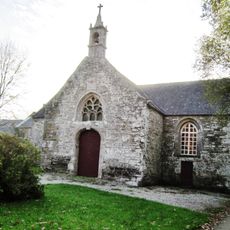
Vorgium, Archaeological site in Carhaix-Plouguer, France.
Vorgium is an archaeological site near Carhaix-Plouguer where you can explore the remains of a Roman city. The location features a visitor center with displayed household items, reconstructed residential buildings, and street sections from the ancient settlement.
Vorgium was the capital of the Osismes, mentioned by Ptolemy in the 2nd century as Vorganium and on the Peutinger Table. The Gallo-Roman town was built from scratch by the Roman administration on a central plateau; at its height in the first half of the 3rd century it covered 130 hectares, far more than Rennes (90 ha) or Corseul (50 ha). Its identity with Carhaix was proposed by Robert Mowat in 1874 after a milestone found at Maël-Carhaix, and confirmed by Louis Pape.
The place shows how people lived and worked during Roman times through reconstructed houses and streets you can walk through yourself. You can see how residents managed daily tasks and what objects they used in their lives.
The site can be explored on foot with digital aids like tablets helping with orientation throughout the grounds. It makes sense to move at a comfortable pace, as parts of the terrain may be uneven and you will need time to take in the details.
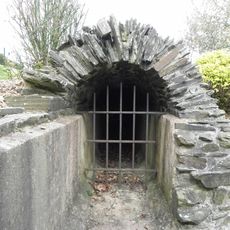
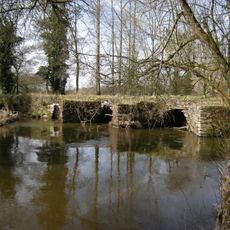
Vorgium's second aqueduct, built in the late 2nd century, ran 27 km from Paule and Glomel with an average gradient of just 0.27 m per kilometre. Its channel was lined with pink tile-mortar and covered with slate slabs under a thin layer of earth, so maintenance crews could reach the conduit. Near Kervoaguel an 800 m tunnel was cut through schist 25 m below a hill, with shafts every 20 to 44 m for removing spoil.
The community of curious travelers
AroundUs brings together thousands of curated places, local tips, and hidden gems, enriched daily by 94,466 contributors worldwide.