Issoudun transmitter, Radio transmission facility in Saint-Aoustrille and Neuvy-Pailloux, France
The Issoudun transmitter is a shortwave radio broadcasting centre in Saint-Aoustrille, near Issoudun. It consists of several fields of curtain and rhombic antennas, including the Y-shaped array of Centre E, visible from the RN 151, and the Alliss rotating antennas installed in the early 1990s. The site also keeps one of the first French broadcasting buildings, which houses a conservatory.
The facility began operations in 1950 with Center A and was later expanded with Centers B and E. This development was part of France's efforts to establish international shortwave broadcasting capabilities following World War II.
The antennas bear names of major rivers like Ganges, Volga, and Mekong, reflecting their role in reaching audiences across different continents. This naming choice shows how the facility served as a symbol of global connection and French presence worldwide.
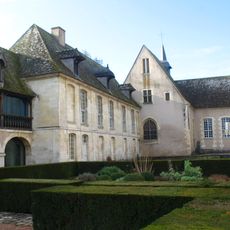
The operating transmission centre is closed to visitors; the site lies in Saint-Aoustrille, a few kilometres from Issoudun, and its masts are seen from the D8 road to Levroux and the RN 151 towards Châteauroux. A conservatory housed in one of the first buildings used for broadcasting in France keeps old sets and equipment. Access to the working areas is restricted, so plan to view the antenna fields from outside the fence.
The Y-shaped antenna field of Center E, south of the Levroux road, was laid out so that each of its three branches could reach a different part of the globe. Its 36 fixed aerials can be reversed to radiate forward or backward, and the Alliss antennas added in the early 1990s rotate a full 360 degrees, aiming at a target region to the degree.
The community of curious travelers
AroundUs brings together thousands of curated places, local tips, and hidden gems, enriched daily by 93,094 contributors worldwide.