Église et cloître des Récollets de Saverne, Gothic monastery complex in Saverne, France
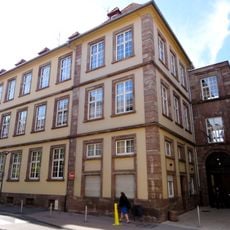
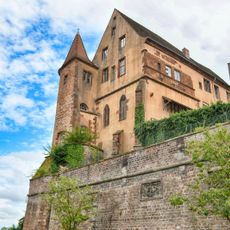
The church of Saint-Antoine-de-Padoue closes the south side of the quadrilateral of convent buildings in Saverne. Its nave has plain white walls and a flat ceiling edged by a molding, with a pointed stone arch carrying ribbed vaulting above the altar area. The cloister, built of pink sandstone, is Gothic.
The complex was established in 1303 as a Franciscan monastery and later served as a Jesuit educational institution. During the 19th century it was converted into military barracks before becoming a public school.
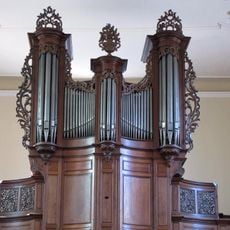
The organ is first documented in 1609, attributed to Johann Faber; the present instrument dates from 1763 and is the work of Louis Dubois. During work under its windchest, 32 manuscript leaves of Gregorian chant glued to the walls were found. The church is dedicated to Saint Anthony of Padua.
The church closes the south side of the convent quadrangle, so the cloister and the conventual wings are reached from the courtyard it encloses. The pink sandstone cloister is the oldest protected element, listed since 3 July 1900, while the church itself was listed on 11 February 1993. Look for the door carved with the date 1303.
The 1763 organ by Louis Dubois hid a surprise: 32 handwritten sheets of Gregorian chant were found glued to the walls beneath its windchest. The instrument replaced an earlier organ attested in 1609, attributed to a certain Johann Faber.
The community of curious travelers
AroundUs brings together thousands of curated places, local tips, and hidden gems, enriched daily by 94,047 contributors worldwide.