Château de Saint-Félix-Lauragais, castle in Occitania, France
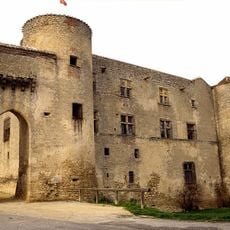
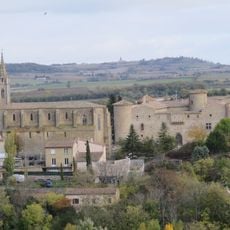
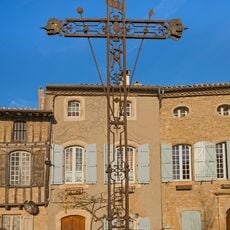
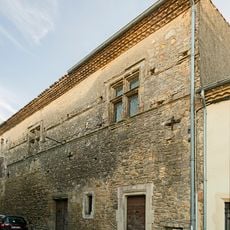
Château de Saint-Félix-Lauragais stands in the village of Saint-Félix-Lauragais, its facade built of rough tan and ochre stone blocks. The broader left section has a low-pitched tiled roof, six tall rectangular openings on the upper level and two thick vertical buttresses; the narrower right section rises slightly higher, with a shuttered window, a window with a cross-shaped mullion and a panelled door at its base.
A castellum at Saint-Félix is first mentioned around 1035, in a homage by its lord Guillaume to Bernard Aton III, viscount of Albi and Nîmes, and to his brother Frotaire, bishop of Nîmes. The site is documented until 1242, when the peace of Lorris between Raymond VII of Toulouse and Louis IX ceded Laurac and the Lauragais for five years. Construction of the present castle is dated to six phases between the mid-13th and 14th centuries, starting around 1245 with the west-wing chapel and the monumental portal.
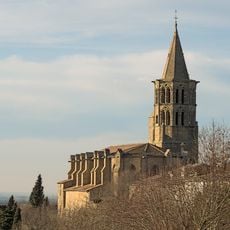
The village and castle take their name from Saint Felix, to whom the 14th-century collegiate church founded by Pope John XXII in 1317 was dedicated. In 1167 the site hosted the Cathar Council of Saint-Félix, presided over by Nicetas, bishop of the Bogomiles, who is said to have consoled the Cathar bishops of northern France, Lombardy, Toulouse, Albi, Agen and Carcassonne. The castle stayed with the Duèze family until the 17th century.
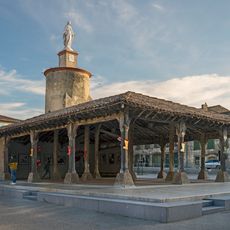
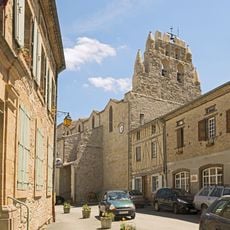
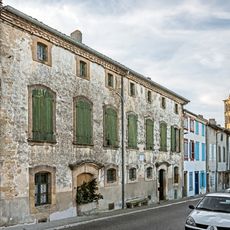
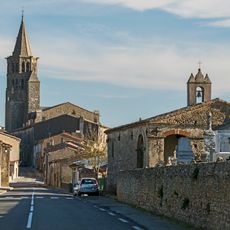
The château stands at the end of the village, in the flat castelnau layout of two parallel streets that Sicard Alaman built for Raymond VII of Toulouse. The commune bought the building in 2012, when only a small part was habitable, so access is limited to the exterior and the grounds. The village is about 40 km from Toulouse, reachable by car or train.
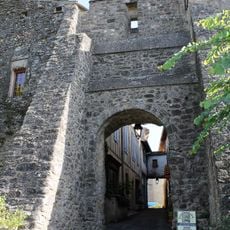
The castle's oldest section is the chapel in the west wing, built around 1245, together with the monumental portal and a fragment of the north gate walled into the north-west corner. The plan of the surrounding castelnau, with two parallel streets and the castle at the end of the village, repeats the layout Sicard Alaman used at Tournon-d'Agenais and Castelnau-de-Montmiral.
The community of curious travelers
AroundUs brings together thousands of curated places, local tips, and hidden gems, enriched daily by 94,531 contributors worldwide.