Saint Calminius Reliquary, Medieval reliquary in Mozac Abbey, France.
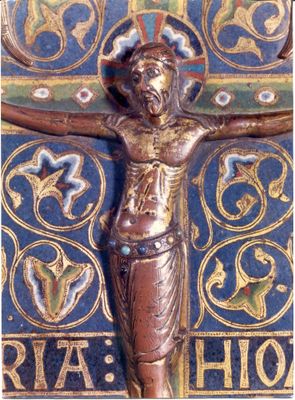
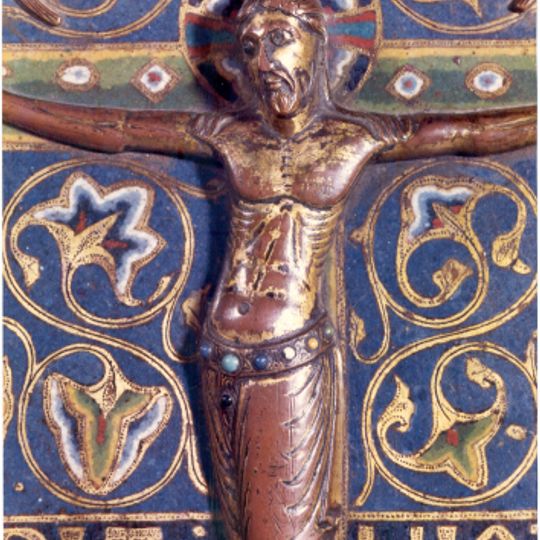
The Saint Calminius Reliquary is a wooden chest 81 cm long, 24 cm wide and 45 cm high, shaped like a church without transept or choir. Fourteen champlevé enamel copper plaques are nailed and gilded, showing the twelve apostles, the crucified Christ and the Virgin and Child. A row of about sixty arches forms the crest balustrade.
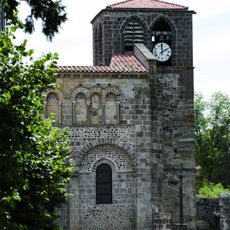
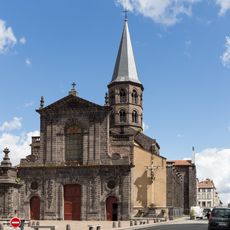
Calminius, a Roman-descended noble titled Duke of Aquitaine and Count of Auvergne, founded three abbeys: Monastier-Saint-Chaffre, Laguenne near Tulle, and Mozac, where he was buried. His relics were first kept in a red-stained wooden chest behind the altar of Saint Peter; royal troops sacked Mozac in 1122 and 1126 and broke that first shrine. The present chasse was made at the end of the 12th century and classified as a Monument historique in 1901.
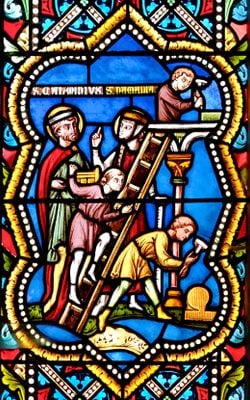
The copper plaques tell the story of Saint Calminius and his wife Namadie through detailed medieval enameling. These religious artworks reflect how people honored important figures in their community through visual storytelling.
The reliquary is now housed at Musée Dobrée where it is displayed under controlled conditions for preservation and public viewing. From here you can examine the fine details of the metalwork and enameling up close.
During the French Revolution, a local resident named Jean Ozenne rescued the reliquary from destruction and theft through a bold act of protection. This secret rescue ensured the precious object survived a turbulent period in history intact.
The community of curious travelers
AroundUs brings together thousands of curated places, local tips, and hidden gems, enriched daily by 93,026 contributors worldwide.