Église Sainte-Croix, Kaysersberg, Medieval parish church in Kaysersberg, France.
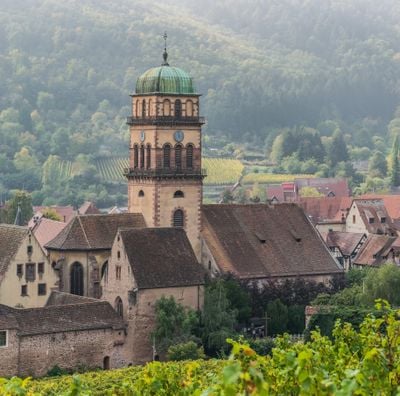
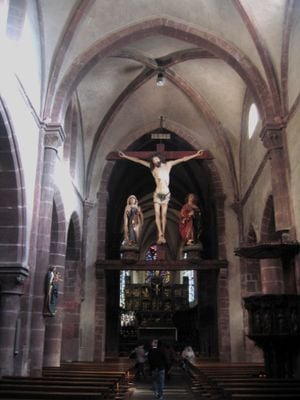
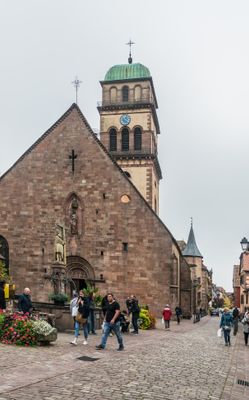
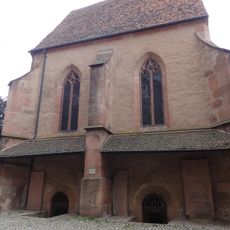
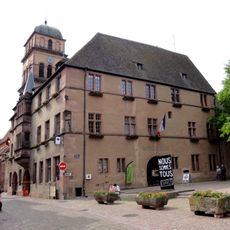
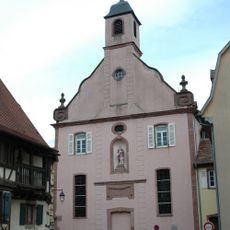
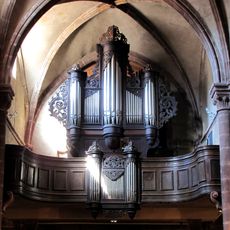
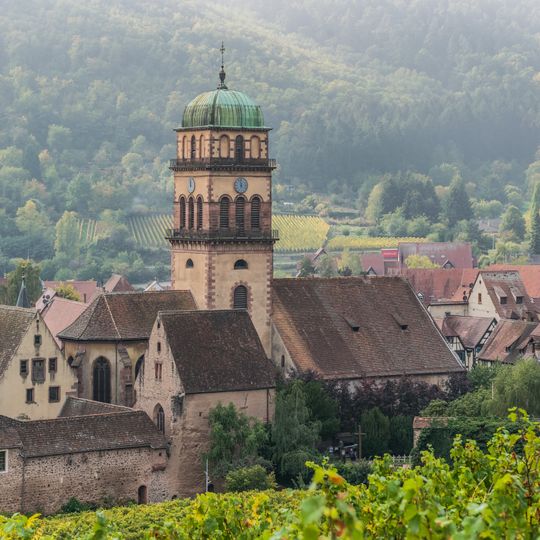
Église Sainte-Croix is a three-aisled basilica of red sandstone, built between 1227 and 1230, with a nave of three bays, a shallow transept and a choir with a three-sided east end. Round columns stand before the square piers of the main vessel and carry the ribbed vaults. A three-storey neo-Romanesque bell tower with a green copper dome rises over the crossing, and the west front keeps its late 12th-century portal.
Construction started in the 13th century following the Hohenstaufen family's acquisition of Kaysersberg in 1227. The building underwent expansions and modifications across subsequent centuries, creating its current form.
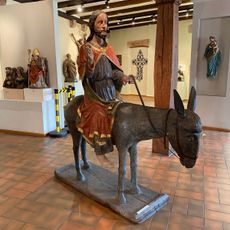
The church was first dedicated to the Virgin Mary and only from 1401 to the Holy Cross. Its late-Gothic furnishings include a 1514 Holy Sepulchre in the north transept, renewed by Jacob Wirth, and a 15th-century choir stall with carved drolleries on the cheeks and misericords.
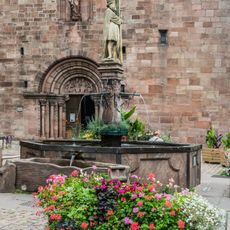
The church stands on the Romanesque Road of Alsace, and its sandstone portal of about 1230–1235 is the oldest part, with a 1889 figure of St Helena above it. Inside, the nave has three bays, a shallow transept and a choir with a three-sided end; the 1514 Holy Sepulchre lies in the north transept.
The west portal is the church's oldest element, from the last quarter of the 12th century, built in Romanesque tradition before the red sandstone basilica was raised between 1227 and 1230. Its jambs are chamfered and studded with balls, and the capitals of the round columns in the three recessed orders show animals and masks. The tympanum depicts the Coronation of the Virgin, and above the arch stands an 1889 figure of Saint Helena holding a cross.
The community of curious travelers
AroundUs brings together thousands of curated places, local tips, and hidden gems, enriched daily by 93,312 contributors worldwide.