Château de Saint-Pierre-Église, Classical manor house in Saint-Pierre-Église, France.
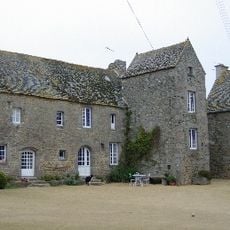
Château de Saint-Pierre-Église is an 18th-century residence built between 1730 and 1758 to plans by naval engineer Nicolas Blondel. Its long symmetrical stone facade has a grey slate roof, a central pediment above a light double door with a fanlight, three rows of windows and tall chimneys. A low stone wall with an iron gate stands in front.
The manor was built between 1730 and 1758 by Bon-Hervé Castel, replacing an earlier Renaissance residence on the site. During World War I it served as a military hospital.
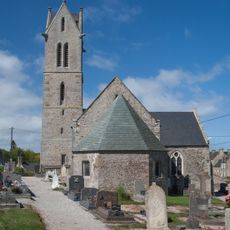
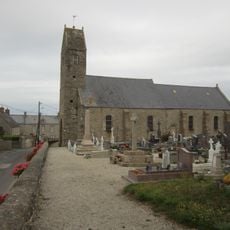
The château's name comes from the parish of Saint-Pierre-Église, whose church stands 400 metres east. The Castel family, lords of the manor, included Charles-Irénée Castel de Saint-Pierre, the 'abbé de Saint-Pierre', born at the earlier manor and author of the Projet de paix perpétuelle, who stayed here repeatedly. The entrance gate and its two fluted pilasters were brought from the château d'Écausseville after World War II.
The château stands on a small rise 400 metres west of the Saint-Pierre church, reached by a long avenue with two pavilions leading to the cour d'honneur. The entrance gate and its two fluted pilasters came from the château d'Écausseville after the war. The 55-hectare park is enclosed by walls pierced by four gates aligned with the cardinal points.
The entrance gate and its two fluted pilasters came from the Château d'Écausseville and were brought back after the war by Auguste Pierre Henri Leviconte de Blangy, replacing Empire-style pillars that had been destroyed. The park's walls, closed from 1730–1731, are pierced by four gates aligned with the cardinal points.
The community of curious travelers
AroundUs brings together thousands of curated places, local tips, and hidden gems, enriched daily by 93,614 contributors worldwide.