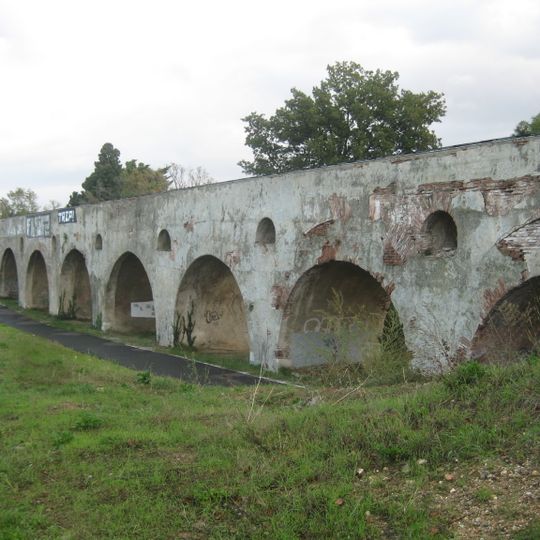
Aqueduc des arcades, Medieval aqueduct in Perpignan, France
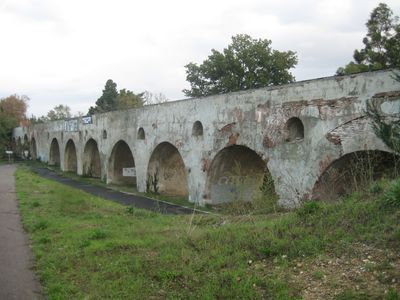
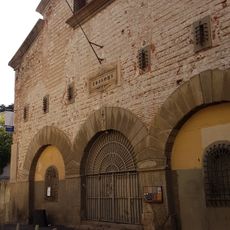
The Aqueduc des Arcades is a bridge-aqueduct on Avenue d'Espagne in Perpignan, about 300 m long, 4.60 m wide and 13 m high, with 21 arches running northeast to southwest. Each arch is a round-headed arc built of cayrou, the large solid brick typical of Catalonia, laid in lime mortar, and every pier is pierced by a through-niche. The tenth arch is wider and has a segmental arch to clear the old path, now a railway line.
The structure was built between 1368 and 1378, shifting from wood construction to solid stone as the work progressed. This evolution reflects advances in medieval engineering for managing water systems across cities.
Locals call it "Rec Comtal" or "Las Canals". Its arches were built with cayrou, large solid bricks typical of Catalonia set in lime mortar, and each pier is pierced by a through-niche. The tenth arch is wider and has a segmental arch, made to span a path now crossed by the railway line.
The monument can be reached via Avenue d'Espagne and connects to local cycling routes in the area. From there, visitors can explore the structure easily on foot or by bicycle.
The tenth arch was intentionally lowered in the 18th century to accommodate a footpath, which was later replaced by railway infrastructure. This practical adjustment demonstrates how the structure adapted to changing urban needs over time.
The community of curious travelers
AroundUs brings together thousands of curated places, local tips, and hidden gems, enriched daily by 94,640 contributors worldwide.