Château de Buoux, Medieval castle in Buoux, France
Château de Buoux is a castle in the Luberon massif, built from the 15th century in a medieval style with later Renaissance additions. Its U-shaped main dwelling and four older buildings form two inner courtyards. The entrance wing, reception wing and apartment wing were added by Ange 1er de Pontevès at the end of the 14th century, and Gabriel de Pontevès later reworked the north and east facades and windows.
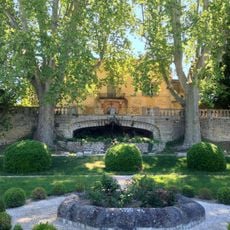
Construction of the castle began in the 15th century in a medieval style, in the valley floor near a through road. On 12 April 1418, Bérenger de Forcalquier gave the lands of Buoux, including the castle, to his chamberlain Lancelot de Pontéves. Ange I de Pontevès added three wings at the end of the 14th century, followed by Gabriel de Pontevès in the 16th century. Pompée de Pontevès fortified the enclosure and added bartizans around 1590, and in the 17th century Louis de Pontevès, marquis de Buoux, enlarged the castle and laid out terraced French gardens with a monumental staircase and a cascade fountain. The 18th-century wing begun by Jean-François Elzéar was never completed. Classified as a monument historique on 3 September 1996, the castle has belonged to the Parc naturel régional du Luberon since 1987.
The château takes its name from the village of Buoux, not from a family. The Pontevès family, who acquired the land in 1418, shaped the estate over centuries. Today the site is owned by the Luberon Regional Nature Park and hosts school groups and a wildlife rescue centre, so visitors may see conservation work rather than period interiors.
The château stands in the Luberon massif at the bottom of a valley, near a through road, not on a hilltop. It is owned by the Parc naturel régional du Luberon, which has run restoration work since 2022, so some areas may be closed off. The site hosts school groups and a wildlife rescue centre, so access is organised around these activities.
Since 1987 the château has belonged to the Parc naturel régional du Luberon, which runs restoration work there. The estate also hosts a regional centre for the protection of wild fauna and a Léo Lagrange holiday centre focused on environmental study for school groups.
The community of curious travelers
AroundUs brings together thousands of curated places, local tips, and hidden gems, enriched daily by 94,562 contributors worldwide.