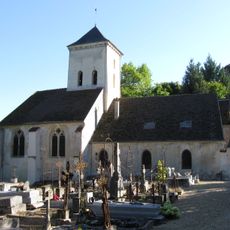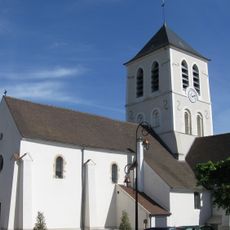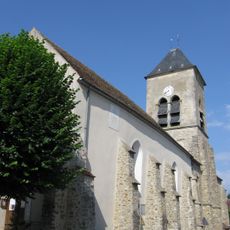
Crypte Saint-Paul, Merovingian crypt in Jouarre, France
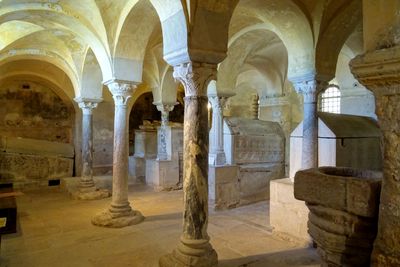
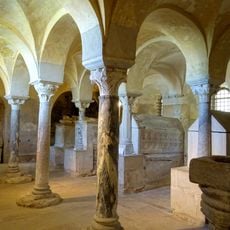
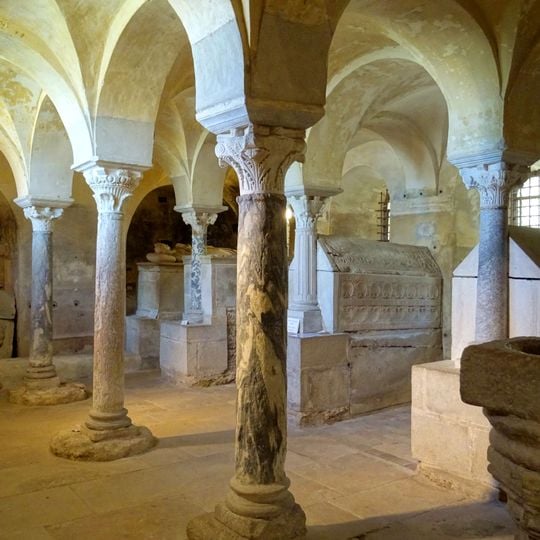
Crypte Saint-Paul is an underground burial chamber in Jouarre with two connected rooms containing marble columns, stone sarcophagi, and carved stone elements. A northern entrance leads inside, while a western opening connects to the smaller southern chamber that has been accessible since 1640.
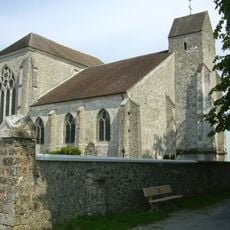
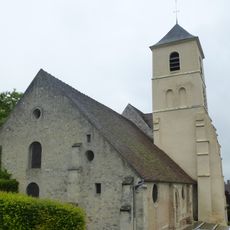
Adon founded Notre-Dame de Jouarre Abbey around 630–635 as a double monastery. Around 680, Agilbert, bishop of Paris, built the Saint-Paul crypt east of the funerary basilica to hold the tombs of Adon and his family. Ébrégisile, bishop of Meaux, had his own crypt built to the south during his lifetime. The two crypts were connected in 1640, and the site was classified as a monument historique in 1840.
The crypt displays Roman marble columns and carved capitals from different periods, reflecting the craftsmanship of earlier epochs. Visitors can see how these architectural pieces were carefully integrated into the underground space.
Visiting requires descending into an underground space that is cool and dimly lit, so bring a flashlight or warm clothing. Access comes through the abbey site, so check the opening hours of the abbey complex before planning your visit.
The west wall of the Saint-Paul crypt is built in opus reticulatum, a Roman masonry of small stones set in a diagonal grid. From top to bottom it forms octagons alternating with small lozenges, then larger lozenges and squares. The black marble column shafts were reused from older dismantled buildings, while the white marble capitals and abaci from the Pyrenees date to the 7th-century construction.
The community of curious travelers
AroundUs brings together thousands of curated places, local tips, and hidden gems, enriched daily by 93,898 contributors worldwide.