Château de Chanteloup, Medieval castle in Chanteloup, France
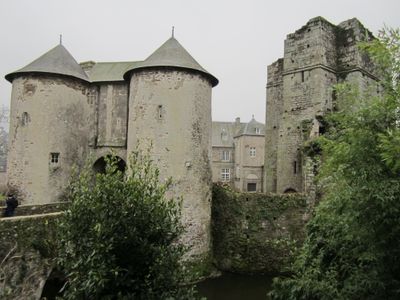
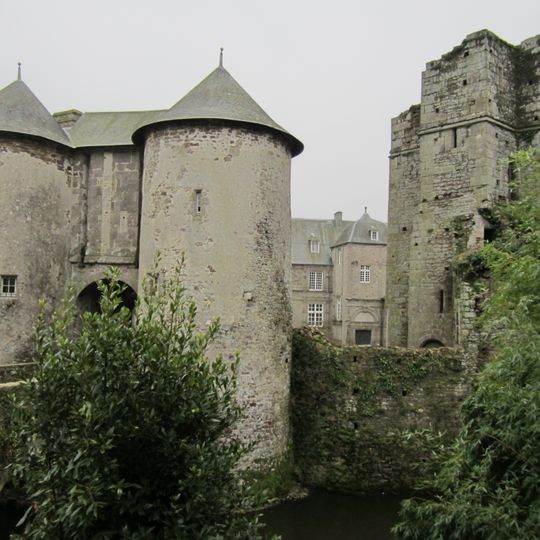
Château de Chanteloup is a granite castle whose polygonal moated site is entered from the west by a small two-arched stone bridge that replaced a drawbridge; deep slots remain on the entrance gatehouse, now level with its two round towers. In the courtyard, the square keep of the 14th century, partly levelled in the Revolution, stands about twenty metres high over three storeys, beside a cylindrical tower with machicolations and arrow slits.
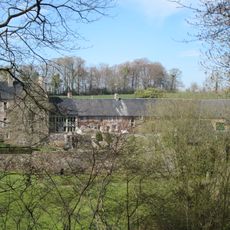
This building was founded by a companion of William the Conqueror and then evolved over several centuries afterward. It was later rebuilt multiple times, with Renaissance facades and new residential sections added to the original structure.
The name Chanteloup refers to the Chanteloup family, who held the manor from the 11th century and allied with the Paynel family through the 1286 marriage of Agnès de Chanteloup to Foulques III Paynel. The Renaissance facade of 1536 carries the initials of Antoine d'Estouteville and his wife Isabeau de Carbonnel. Around 1655 Jean de Montgomery completed the dwellings.
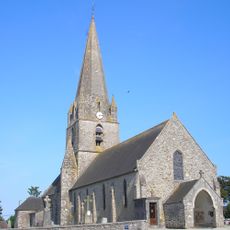
The castle stands 600 m south of the Saint-Pierre church in Chanteloup. Entry to the courtyard is on the west side, over a small two-arched stone bridge that replaced the drawbridge; the slots cut for the old drawbridge are still visible on the entrance gatehouse facade. The moats still surround the polygonal site, and the ground inside is uneven.
Around 1655 the castle was bought by Jean de Montgomery, who completed the dwellings. During the Revolution a Dame Duprey had the keep and the two gate towers levelled and the drawbridge removed. The keep, now about 20 metres high over three storeys, is among the oldest in the Manche.
The community of curious travelers
AroundUs brings together thousands of curated places, local tips, and hidden gems, enriched daily by 94,759 contributors worldwide.