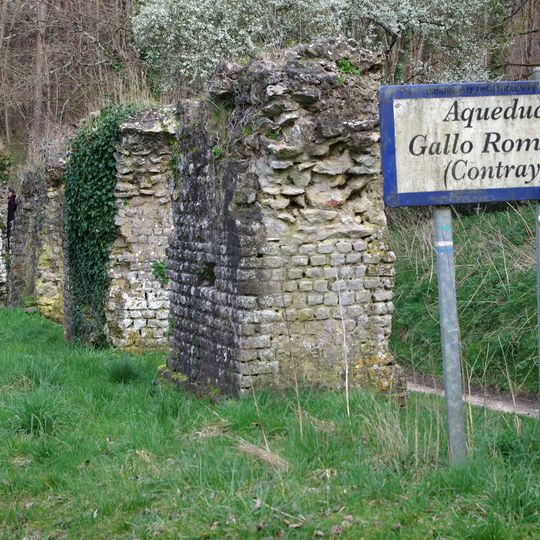
Aqueduc de Contray, Gallo-Roman aqueduct
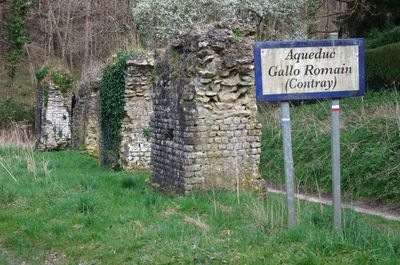
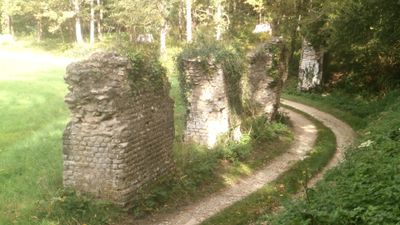
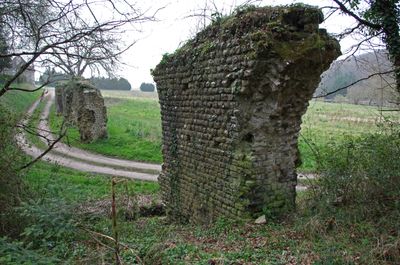
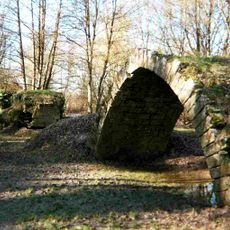
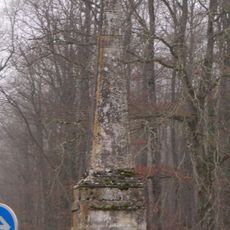
The Aqueduc de Contray is a Roman water channel near Loches that transported water from a natural source over roughly one and a half kilometers to supply a local villa. The surviving remains consist of four stone pillars standing about 13 feet (4 meters) tall, which once supported the arches of the system.
The aqueduct was built during the Roman period, likely between the second and third centuries, to convey water to a local settlement. Archaeological finds such as Roman tiles and coins from this era confirm its use and help date the structure.
The aqueduct's name comes from the Ruisseau de Contray, a small stream that flows nearby. Today, locals and visitors see it as a quiet place where one can feel connected to the past and appreciate the skill of ancient builders.
The site is accessible via walking paths and is best visited on a dry day to avoid mud and wet conditions. Comfortable walking shoes are recommended, and visitors should walk carefully around the stone structures rather than climbing on them.
The water likely flowed underground after a certain point as the ground rises, which means many parts of the structure remain hidden beneath the earth and unexplored. No recent excavations have taken place, so future archaeological work could uncover more details about how it was built and used.
The community of curious travelers
AroundUs brings together thousands of curated places, local tips, and hidden gems, enriched daily by 60,000 contributors worldwide.