Château de Ferrières, Historical monument in Fontrieu, France.
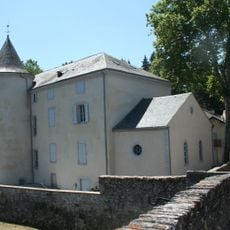
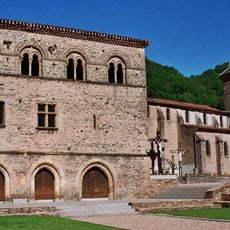
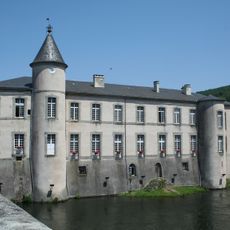
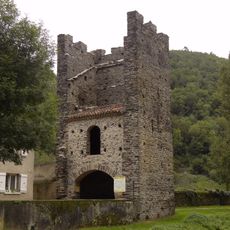
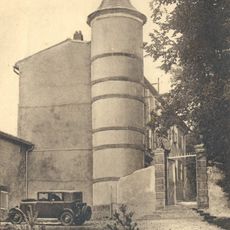
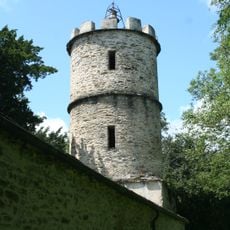
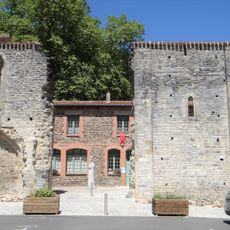
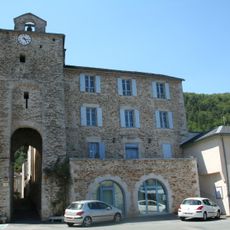
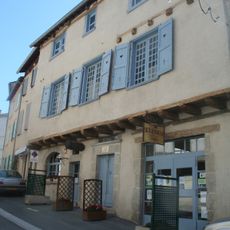
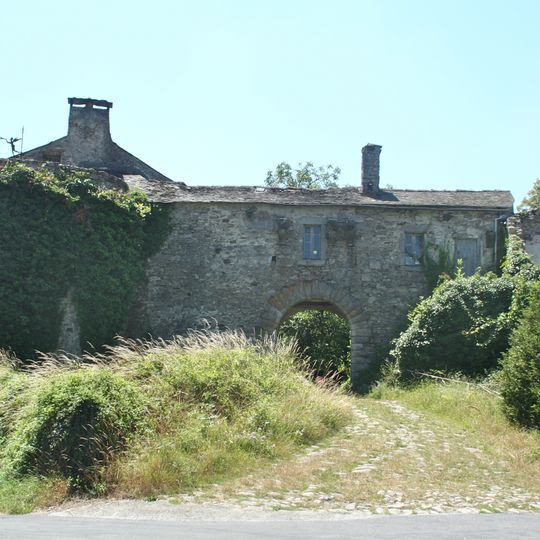
The Château de Ferrières in Fontrieu is a fortified building on an irregular hexagonal plan, with towers at its corners. Its rough grey-brown stone walls carry a shallow pitched roof with two chimneys, and a low round-headed archway opens at ground level, with small rectangular windows set above it. The residential wings are Renaissance in style, their facade carved with sculptures and mullioned windows framed by worked colonnettes.
The Taillefer family held the seigneurie in the 13th century, and some vaults may predate that period. Guillaume de Guilhot, a Protestant leader in the Wars of Religion, fortified the castle with booty from his victories; Henry of Navarre is said to have stopped here in 1585. In 1708 it became a prison for detainees held by lettre de cachet, and in 1793 its towers were demolished while the dwelling was kept.
The castle's name comes from the Ferrières family, and the Taillefer family held the seigneurie in the 13th century. Since 1708 the building served as a prison, where people were held without trial by lettre de cachet; even the son of Armand Thomas Hue de Miromesnil, Keeper of the Seals, was imprisoned there. Today the Ferrières-Renaissance association works on its conservation and restoration.
The castle is accessible via the D622 departmental road with parking available nearby. Visitors should wear sturdy footwear to explore the site and surrounding mountainous terrain properly.
The round-headed archway at ground level and the two small windows above it are among the few openings left after the towers were demolished in 1793, during the Revolution; the living quarters were spared. The Taillefer family held the seigniory in the 13th century, and some vaults may predate that period.
The community of curious travelers
AroundUs brings together thousands of curated places, local tips, and hidden gems, enriched daily by 93,599 contributors worldwide.